
Global greenhouse gas emissions reached a record high of 52.8 gigatons of CO₂ equivalent in 2024, according to Rhodium Group — and businesses sit at the center of that challenge. At the same time, a PwC survey of over 20,000 consumers across 31 countries found that 80% are willing to pay more for sustainably produced goods. The message is clear: the way businesses operate is changing — and the businesses that adapt earliest will be the ones that thrive.
This is exactly why green business has moved from niche concept to mainstream business strategy.
Whether you are an entrepreneur planning your first venture, a student researching sustainability, or an established business owner looking to reduce costs and future-proof your operations, this guide explains everything you need to know — from the meaning of green business and its core principles to practical examples, benefits, challenges, and how to start your own green business in Nigeria.
Key Things to Know About Green Business
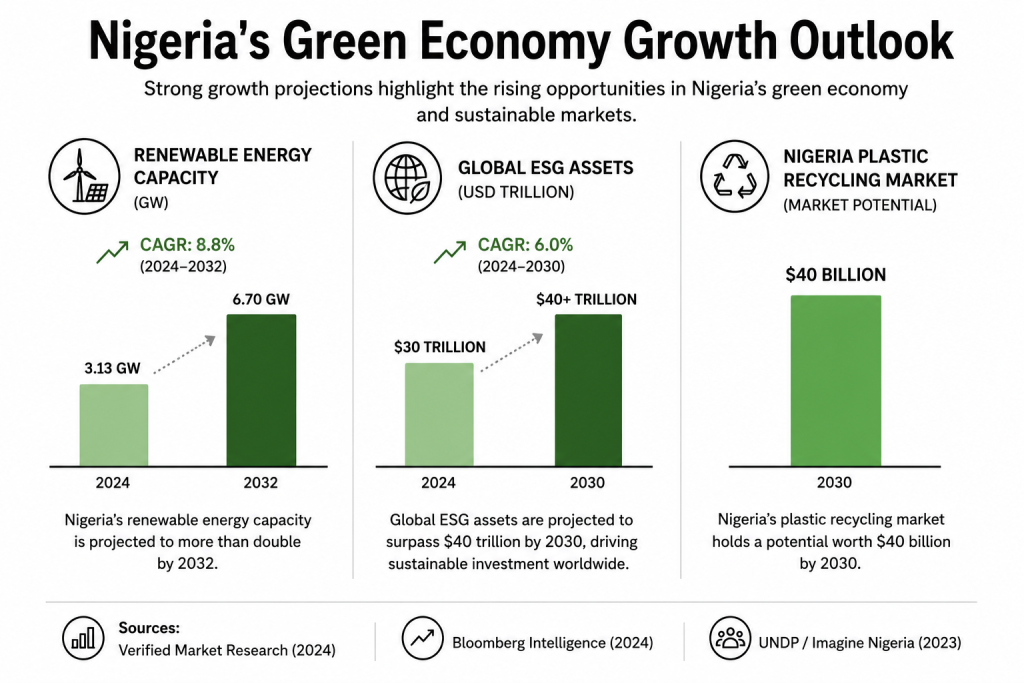
- Global ESG assets surpassed $30 trillion in 2022 and are projected to exceed $40 trillion by 2030, according to Bloomberg Intelligence — meaning businesses with strong sustainability credentials have a growing pool of capital available to them.
- According to the U.S. Department of Energy, LED lighting alone uses at least 75% less energy than incandescent bulbs and lasts up to 25 times longer — one of the simplest, most cost-effective green upgrades any business can make.
- Nigeria generates an estimated 2.5 million metric tonnes of plastic waste annually and ranks ninth globally for plastic pollution — representing both a serious environmental challenge and a major entrepreneurial opportunity in recycling and circular economy businesses.
- Nigeria’s renewable energy market is projected to grow from 3.13 gigawatts in 2024 to 6.70 gigawatts by 2032, at a CAGR of 10%, creating significant business opportunities in solar, mini-grids, and battery storage.
- The concept of sustainable development — which underpins all green business thinking — was formally defined in the 1987 Brundtland Report, Our Common Future, published by the United Nations World Commission on Environment and Development.
- Sustainability is not just an environmental issue: it is a financial one. Businesses that reduce waste lower operating costs, those that improve energy efficiency cut electricity bills, and those with strong environmental practices are better positioned to attract customers, employees, and investors.
- Key Things to Know About Green Business
- Why Green Business Matters
- What Is Green Business?
- Green Business vs. Sustainable Business: What Is the Difference?
- A Brief History of Green Business
- The 7 Core Principles of Green Business
- Key Characteristics of Green Businesses
- Benefits of Green Businesses
- Real-World Examples of Green Businesses
- Which Industries Can Go Green?
- How to Start a Green Business: A 10-Step Roadmap
- Common Challenges Green Businesses Face
- How to Overcome Those Challenges
- The Future of Green Business in Nigeria
- Case Study: How Small Operational Changes Create Big Business Results
- Frequently Asked Questions
- Final Thoughts
- References
Why Green Business Matters
Business has always depended on natural resources. Every product we use — from food and clothing to smartphones and vehicles — requires raw materials, energy, transportation, water, and labor to produce.
For decades, many businesses focused primarily on maximizing production and profits, often with little consideration for environmental consequences. As economies grew, so did pollution, deforestation, carbon emissions, and the depletion of natural resources.
Today, those environmental challenges directly affect businesses. According to the World Resources Institute, the energy sector — which includes electricity and heat production, transportation, and manufacturing — accounts for the majority of global greenhouse gas emissions. Specifically, electricity and heat production alone contribute 33.6% of all emissions, with manufacturing and construction adding another 12.2%.
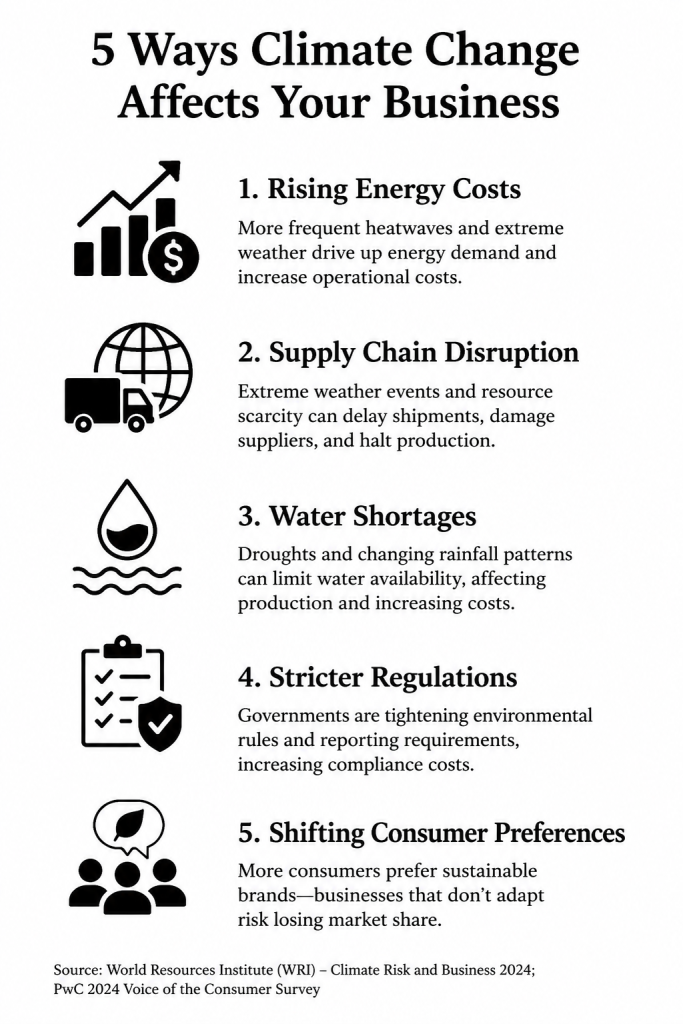
These are not abstract numbers. They translate into real business risks:
- Rising temperatures reduce agricultural productivity.
- Flooding disrupts supply chains and damages infrastructure.
- Water shortages can halt manufacturing operations.
- High energy costs increase operating expenses.
- Waste disposal regulations create additional compliance requirements.
- Consumers increasingly prefer environmentally responsible brands — with 80% of global consumers in a 2024 PwC survey stating they are willing to pay more for sustainably produced goods.
Businesses that ignore these realities may find it increasingly difficult to remain competitive over the long term.
Green businesses recognize that environmental responsibility is not separate from business success — it is part of it.
Why This Matters Specifically for Nigeria
Nigeria presents both unique sustainability challenges and significant opportunities. As Africa’s largest economy, the country faces mounting environmental pressures, including inadequate waste management, energy shortages, flooding, deforestation, and air pollution in major cities.
At the same time, Nigeria holds enormous untapped potential in renewable energy. The country has the potential to generate 427 gigawatts of solar energy, and the government aims to achieve a 30% renewable energy share in its total energy mix by 2030. According to the Nigerian government and UNDP’s Imagine Nigeria report, Nigeria’s green economy is already estimated to be worth approximately $250 billion, with plastic recycling alone representing an estimated $40 billion market.
For entrepreneurs and business owners, sustainability is not just about protecting the environment — it is increasingly a source of competitive advantage and new business opportunity.
Many businesses begin their sustainability journey with simple improvements such as switching to LED lighting, reducing paper use, optimizing delivery routes, or recycling packaging materials.
What Is Green Business?
A green business is a business that actively works to reduce its environmental impact while operating profitably and creating positive value for society.
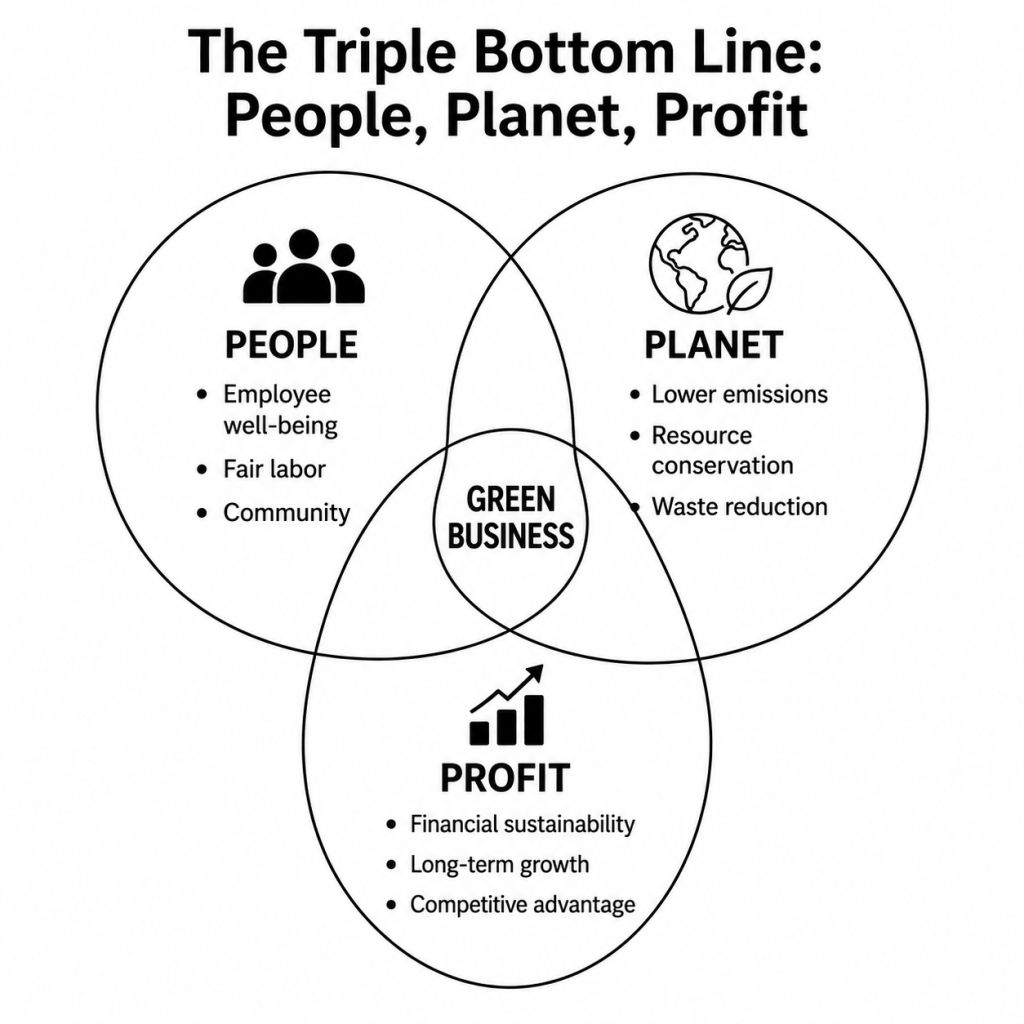
Unlike traditional businesses that may focus almost entirely on financial performance, green businesses seek to balance three important objectives: environmental responsibility, economic success, and social well-being.
This concept is often referred to as the Triple Bottom Line — People, Planet, and Profit.
Rather than viewing environmental protection as a cost, green businesses see sustainability as an opportunity to innovate, improve efficiency, reduce risks, and create long-term value.
Green Business Is About How You Operate, Not Just What You Sell
Many people assume that a green business simply sells environmentally friendly products. That is only one possibility.
A company does not need to manufacture solar panels or electric vehicles to qualify as a green business. Consider these examples:
- A bakery can reduce food waste by donating unsold products.
- A fashion company can use recycled fabrics.
- A manufacturer can install solar panels on its roof.
- A logistics company can optimize delivery routes to reduce fuel consumption.
- A hotel can conserve water through efficient plumbing systems.
- A software company can operate a paperless office powered by renewable electricity.
Green business is therefore more about how a business operates than what it sells.
Common Goals of Green Businesses
Although businesses vary widely, most green businesses share similar sustainability goals, including reducing greenhouse gas emissions, improving energy efficiency, conserving water, minimizing waste, increasing recycling rates, using renewable energy, supporting ethical supply chains, and contributing positively to local communities.
No business achieves all these goals immediately. Sustainability is a journey of continuous improvement.
Green Business vs. Sustainable Business: What Is the Difference?
The terms green business and sustainable business are often used interchangeably, but they are not exactly the same.
| STRATEGIC PILLAR | GREEN BUSINESS | SUSTAINABLE BUSINESS |
|---|---|---|
| Primary Focus | Active reduction of environmental impact and ecological footprint. | Strategic integration of environmental, social, and economic performance. |
| Key Emphasis | Adoption of eco-friendly operational practices and resource efficiency. | Ensuring long-term organizational resilience and holistic value creation. |
| Core Scope | Direct ecological factors: energy, waste, pollution, and conservation. | Governance, ethics, human capital, community impact, and environment. |
| Relationship | The foundational operational layer of environmental responsibility. | The overarching strategic framework and organizational mission. |
In simple terms: Every sustainable business should include green practices, but not every green business addresses the full range of social and governance issues that define sustainability.
A Brief History of Green Business
Before the Environmental Movement
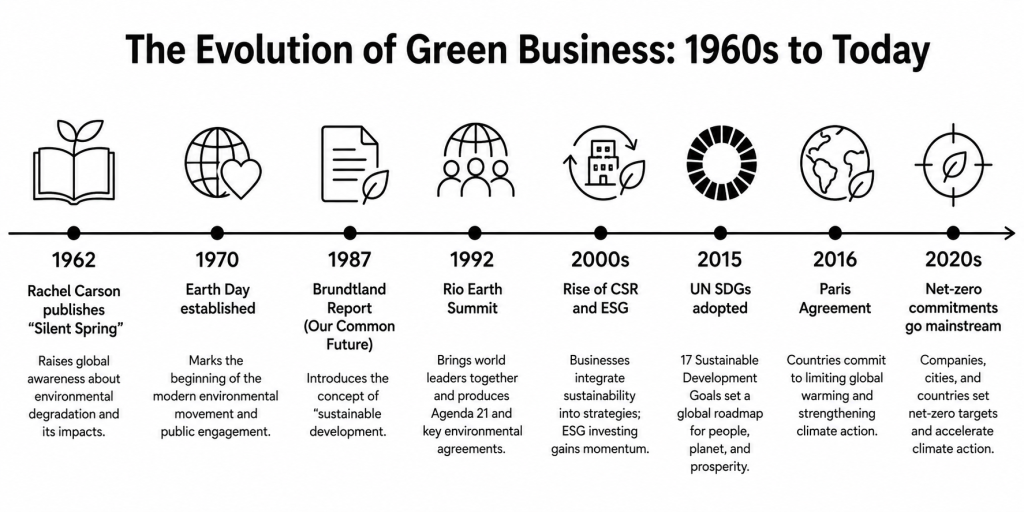
For much of the Industrial Revolution, businesses prioritized production and economic expansion. Environmental impacts — pollution, deforestation, excessive waste — received relatively little attention.
The Rise of Environmental Awareness (1960s–1970s)
By the 1960s and 1970s, public environmental awareness had grown rapidly. Governments introduced pollution controls, environmental organizations gained influence, and consumers became more aware of how businesses affected the environment.
The 1987 Turning Point: The Brundtland Report
A major turning point came in 1987 with the publication of Our Common Future by the United Nations World Commission on Environment and Development. The report, chaired by former Norwegian Prime Minister Gro Harlem Brundtland, introduced the world’s most widely accepted definition of sustainable development:
“Development that meets the needs of the present without compromising the ability of future generations to meet their own needs.”
This definition fundamentally changed how governments, businesses, and consumers viewed economic growth. Instead of seeing environmental protection as a barrier to development, businesses began exploring ways to create economic value while conserving natural resources.
Green Business Today
Modern green businesses focus on climate action, renewable energy adoption, circular economy principles, sustainable procurement, carbon footprint reduction, and responsible innovation. Digital technologies — artificial intelligence, smart sensors, cloud computing, and the Internet of Things — now help businesses monitor energy use, optimize logistics, reduce waste, and improve efficiency.
Consumer expectations have also evolved. According to a 2024 Simon-Kucher Global Sustainability Study of over 6,000 consumers across six countries, sustainability is now a critical factor in business success, with nearly 70% of respondents conducting at least some research before trusting a brand’s sustainability claims.
The 7 Core Principles of Green Business
Successful green businesses are guided by a common set of principles that influence decisions across operations, product development, supply chains, marketing, and corporate strategy.
1. Resource Efficiency
Green businesses strive to achieve more while using fewer resources — reducing electricity consumption, water usage, raw material waste, fuel consumption, packaging materials, and office supplies.
Resource efficiency demonstrates that sustainability and profitability often go hand in hand. For example, according to the U.S. Department of Energy, LED bulbs use at least 75% less energy than incandescent lighting and last up to 25 times longer, directly reducing electricity costs for any business that makes the switch.
2. Pollution Prevention
Rather than cleaning up pollution after it occurs, green businesses aim to prevent it from happening in the first place — through cleaner production technologies, low-emission equipment, responsible chemical management, and reduced industrial wastewater. Prevention is almost always more cost-effective than remediation.
3. Waste Reduction
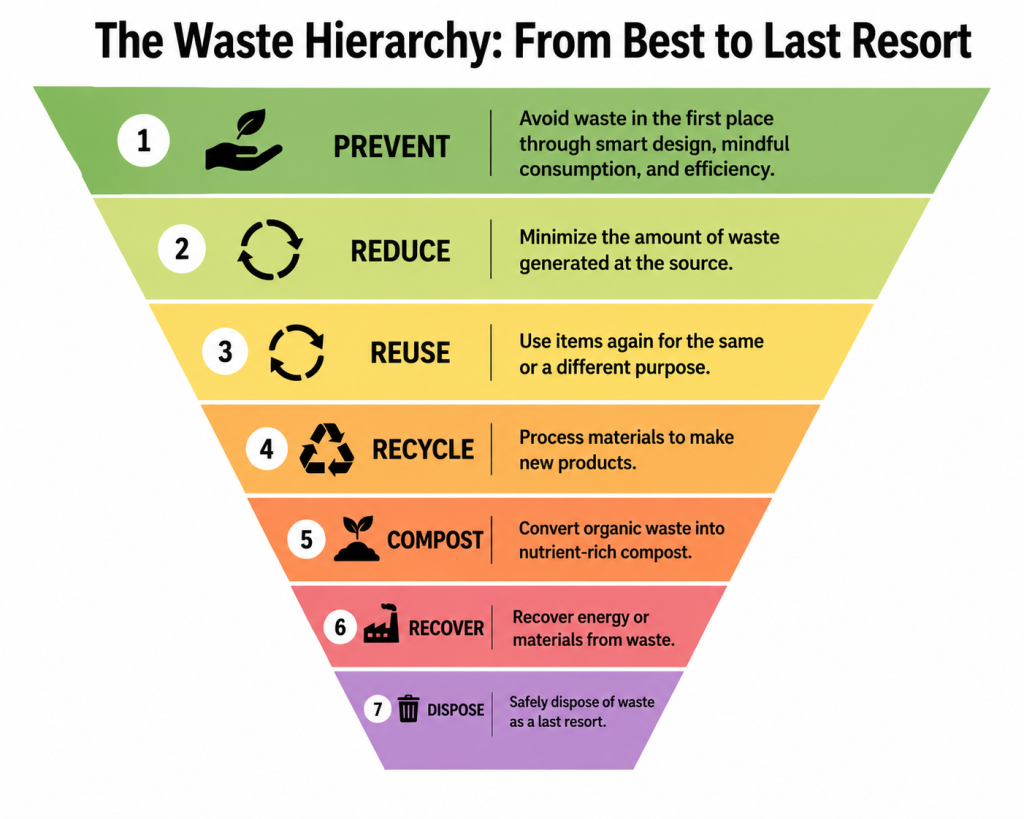
Waste represents lost resources and lost money. Green businesses follow the internationally recognized waste hierarchy:
- Prevent waste
- Reduce waste
- Reuse materials
- Repair products
- Recycle materials
- Recover energy where possible
- Dispose only as a last resort
4. Energy Efficiency
Energy is one of the largest operating expenses for many organizations. Green businesses actively seek ways to reduce unnecessary energy consumption through efficient machinery, smart lighting, building insulation, motion sensors, and renewable energy. Lower energy use reduces both operating expenses and carbon emissions.
5. Water Conservation
Fresh water is becoming an increasingly valuable resource. Businesses that depend heavily on water — agriculture, hospitality, food processing, manufacturing, and construction — benefit significantly from efficient water management, including fixing leaks promptly, rainwater harvesting, recycling systems, and efficient irrigation.
6. Sustainable Sourcing
A company’s environmental impact extends beyond its own facilities. The products and services purchased from suppliers also matter. Green businesses therefore consider where materials come from, how workers are treated, whether forests are responsibly managed, transportation emissions, and supplier environmental practices.
7. Continuous Improvement
No business becomes fully sustainable overnight. Green businesses treat sustainability as a journey rather than a destination.
Key Characteristics of Green Businesses
While green businesses vary across industries, they tend to share several common characteristics that distinguish them from businesses making only occasional environmental improvements.
They think long-term. Rather than prioritizing only quarterly results, green businesses consider how today’s decisions affect future operations, customers, communities, and the environment.
They measure their environmental impact. Green businesses monitor key environmental indicators such as energy consumption, water use, waste generation, recycling rates, fuel consumption, greenhouse gas emissions, and packaging materials. As a widely cited management principle puts it: “You can’t improve what you don’t measure.”
They innovate. Innovation is at the heart of many successful green businesses. Instead of viewing environmental challenges as obstacles, they see opportunities to create better products, improve efficiency, and develop new markets.
They engage employees. Sustainability cannot be achieved by management alone. Green businesses provide sustainability training, encourage employee ideas, reward innovation, form green teams, and share environmental performance updates regularly.
They build trust through transparency. Customers increasingly value transparency. According to BSI research published in December 2024, 76% of consumers are more likely to purchase from companies that verify their environmental credentials through certifications or evidence.
They consider their entire value chain. Green businesses don’t focus only on what happens inside their offices or factories — they also examine their suppliers, transportation, product design, packaging, customer use, and product disposal.
Benefits of Green Businesses
One of the biggest misconceptions about sustainability is that it only benefits the environment. In reality, green business practices often generate environmental, financial, and social benefits simultaneously.
Environmental Benefits
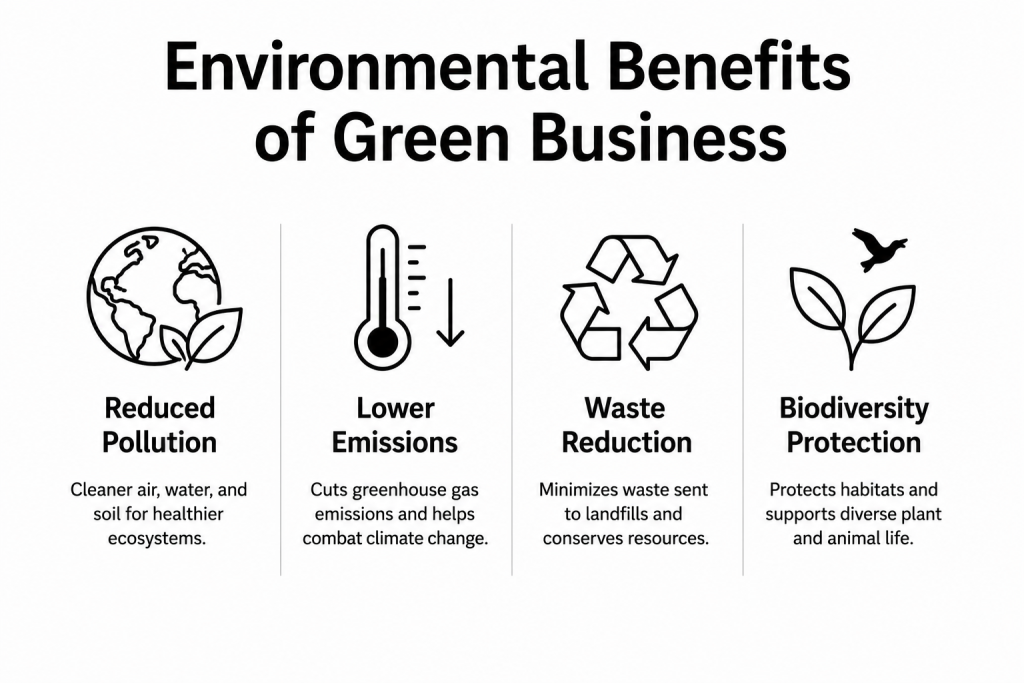
Reduced Pollution. Green businesses actively reduce emissions released into the air, water, and soil, helping improve environmental quality and reducing health risks for surrounding communities.
Lower Greenhouse Gas Emissions. According to the World Resources Institute, global greenhouse gas emissions grew by 50% from 1990 to 2023. Energy-efficient operations and renewable energy adoption help businesses reduce their share of those emissions.
Waste Reduction and Conservation of Natural Resources. Reducing waste means fewer materials end up in landfills and more natural resources are preserved for future generations.
Protection of Biodiversity. Businesses can support biodiversity by reducing habitat destruction, limiting pollution, sourcing responsibly, and supporting conservation initiatives. Healthy ecosystems also support agriculture, tourism, fisheries, and many other industries.
Economic Benefits
One of the biggest myths surrounding green business is that “going green is too expensive.” While some sustainability initiatives require upfront investment, many reduce operating costs, improve efficiency, and create long-term financial value.
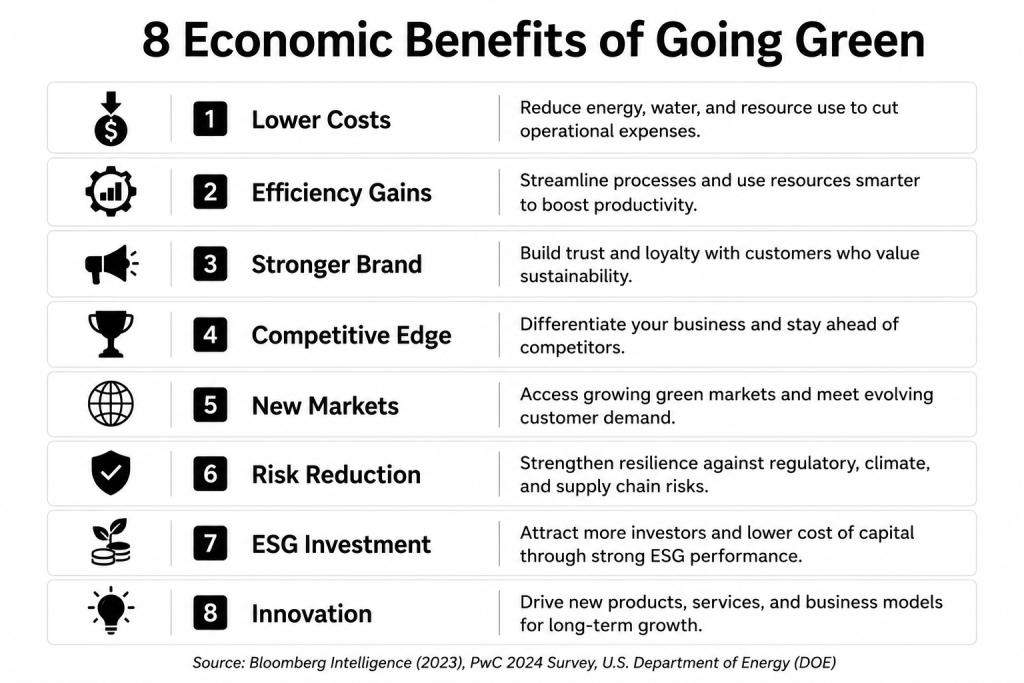
1. Lower Operating Costs
Reducing waste often means reducing expenses. Businesses can save money by switching to LED lighting, installing energy-efficient equipment, reducing water consumption, digitizing documents instead of printing, optimizing transportation routes, improving inventory management, and reducing packaging materials.
Example: According to the U.S. Department of Energy, energy savings from LED lighting could reach 569 TWh annually in the United States alone by 2035, equal to the annual output of more than 92 large power plants.
2. Increased Operational Efficiency
Green businesses constantly look for ways to eliminate wasted time, energy, and resources — leading to faster production, better resource utilization, fewer errors, improved workflow, and lower maintenance costs.
3. Stronger Brand Reputation
According to PwC’s 2024 Voice of the Consumer Survey, 46% of global consumers say they are buying more sustainable products as a way to reduce their environmental impact. Companies known for genuine sustainable practices often enjoy higher customer trust, stronger brand loyalty, and better public perception.
However, it is important that sustainability claims are genuine. Exaggerated or misleading environmental claims — commonly known as greenwashing — can quickly and permanently damage a company’s reputation.
4. Competitive Advantage
Sustainability can help businesses stand out in crowded markets. When two businesses offer similar products at comparable prices, customers may choose the one with environmentally responsible practices, recyclable packaging, or ethical sourcing.
5. Access to New Markets
Governments, multinational companies, and international organizations increasingly prefer suppliers that meet sustainability requirements. Businesses with strong environmental practices may become eligible for green procurement opportunities, export markets, international partnerships, sustainability certifications, and environmentally focused investment funds.
6. Better Risk Management
Businesses face growing environmental risks, including rising energy costs, water shortages, extreme weather events, resource scarcity, and new environmental regulations. Green businesses often prepare for these challenges earlier than competitors, making them more resilient over the long term.
7. Easier Access to Investment
According to Bloomberg Intelligence, global ESG assets are on track to surpass $40 trillion by 2030 — over 25% of projected total assets under management. A majority of investors (85%) surveyed by Bloomberg also reported that ESG considerations lead to better returns and more resilient portfolios. Businesses that adopt responsible environmental practices may be better positioned to attract this growing pool of future investment.
8. Innovation Opportunities
Sustainability encourages businesses to rethink products, services, and operations. Many of today’s fastest-growing industries — including renewable energy, electric mobility, sustainable agriculture, and recycling — have emerged directly from environmental challenges.
Social Benefits
Green businesses don’t only benefit the environment — they also create positive impacts for employees, customers, suppliers, and communities.
Healthier Workplaces. Reducing pollution, improving ventilation, using safer materials, and maintaining cleaner work environments can improve employee health and reduce absenteeism.
Employee Engagement. Many employees, particularly younger professionals, prefer working for organizations whose values align with their own. Businesses that prioritize sustainability often find it easier to attract talent, retain skilled employees, and build stronger organizational culture.
Community Development. Responsible businesses contribute positively to the communities in which they operate — by supporting local suppliers, investing in environmental education, creating green jobs, and participating in community initiatives.
Improved Customer Trust. Customers increasingly want to know where products come from, how they are made, and whether workers are treated fairly. According to BSI’s December 2024 survey of nearly 10,000 global consumers, 65% want clear and accessible information about a product’s environmental footprint.
Real-World Examples of Green Businesses
Examples from Nigeria
Nigeria is already home to businesses that are helping build a greener economy.
Solar Energy Businesses. Nigeria ranked fourth in Africa for solar energy adoption in 2024, adding 63.5 megawatts peak of capacity to bring its total installed capacity to 385.7 MWp, according to The Electricity Hub. Businesses across the country are involved in solar panel installation, solar mini-grids, solar home systems, battery storage, and solar maintenance — helping reduce dependence on diesel generators while improving energy access.
Plastic Recycling Businesses. Nigeria generates an estimated 2.5 million metric tonnes of plastic waste annually and ranks ninth globally for plastic pollution. Only about 20–30% of solid waste is collected and managed correctly. This gap represents a significant business opportunity. Across cities such as Lagos, Abuja, and Port Harcourt, recycling companies are collecting plastic waste and converting it into new products — reducing pollution, creating jobs, and advancing circular economy goals.
Sustainable Agriculture. Solar energy in Nigeria averages 4.5–6.5 kWh/m²/day, a solar resource that is 40–60% stronger than many European locations — making solar-powered precision agriculture an increasingly viable path for Nigerian farmers seeking to modernize and reduce input costs.
Waste Collection and Upcycling. Innovative entrepreneurs are creating businesses that collect discarded materials and transform them into furniture, fashion products, building materials, decorative items, and household goods — demonstrating how waste can become a valuable economic resource.
International Examples of Green Businesses
Green business is a global movement. Some well-known companies demonstrate how environmental responsibility can combine with commercial success:
Renewable Energy Companies — Companies like Tesla, Ørsted, and Vestas have built global businesses around solar, wind, hydro, and battery technologies, reducing reliance on fossil fuels.
Sustainable Consumer Brands — Companies like Patagonia, IKEA, and Unilever have built strong reputations around sustainable sourcing, recyclable packaging, and responsible manufacturing.
Circular Economy Businesses — Electronics refurbishment companies, clothing resale platforms, and industrial recycling businesses design systems that keep materials in use for as long as possible.
Green Building Leaders — Many international construction firms specialize in energy-efficient buildings, sustainable materials, and low-carbon design — delivering buildings that reduce both energy consumption and long-term operating costs.
Which Industries Can Go Green?
One of the most important lessons for beginners is this: almost any industry can become greener. You do not need to start a recycling company or a solar business to participate in the green economy.
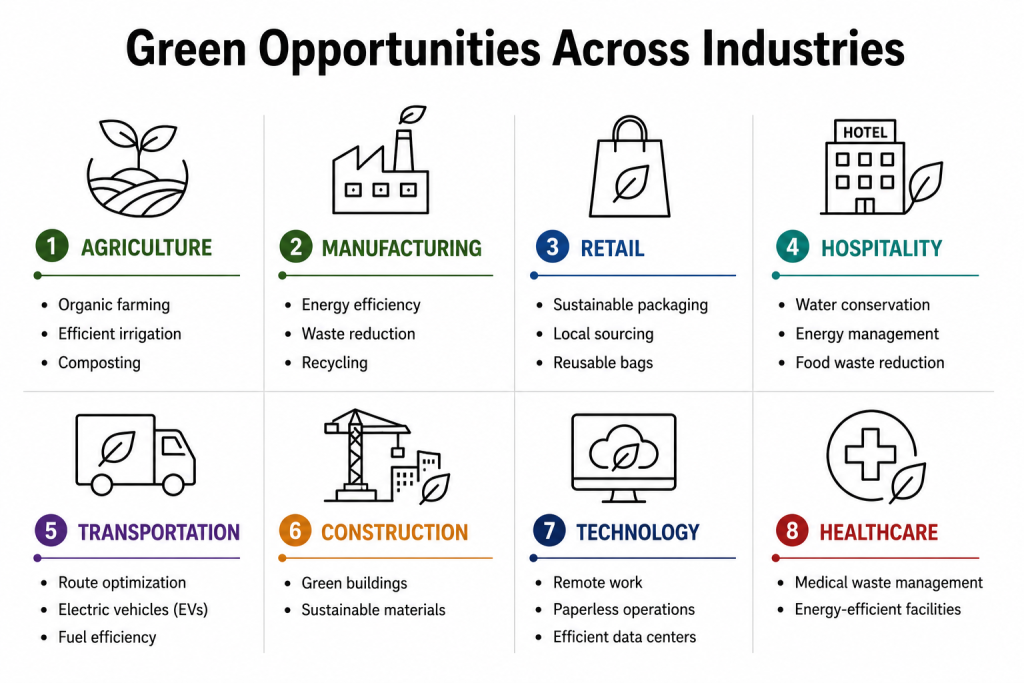
The question is not “Can my industry become green?” but “How can my industry become greener than it is today?”
How to Start a Green Business: A 10-Step Roadmap
Starting a green business does not require perfection from day one. The most successful sustainable businesses improve gradually while building a strong commercial foundation.
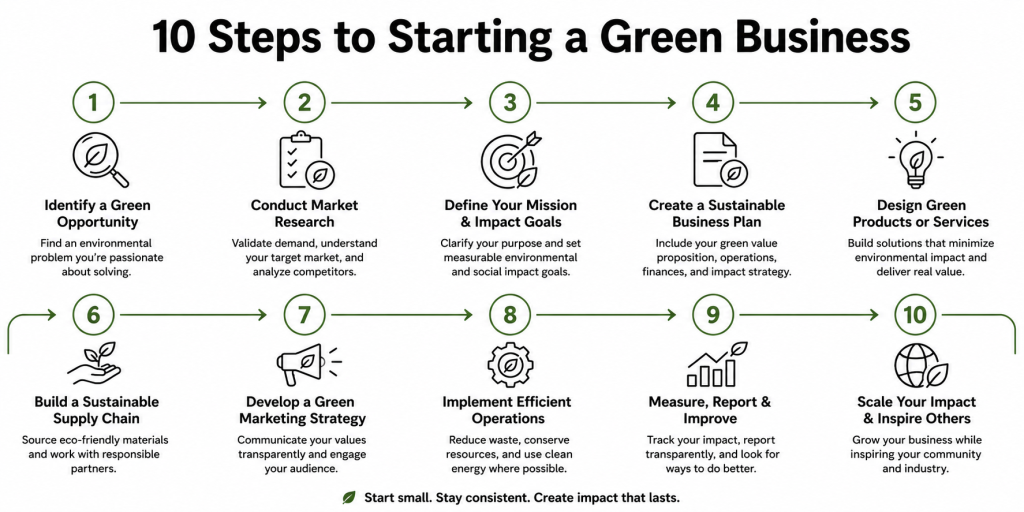
Step 1: Identify a Real Problem. Start by finding a genuine customer problem — high electricity costs, plastic waste, water shortages, food waste, poor waste collection, or expensive transportation. Successful green businesses solve problems that people are already willing to pay to address.
Step 2: Validate Market Demand. Before investing heavily, confirm that customers actually want your solution — through customer interviews, small pilot projects, a minimum viable product (MVP), or competitor analysis.
Step 3: Define Your Green Value Proposition. Clearly explain why your business is better for the environment. For example: “We reduce plastic waste by offering refillable household products” or “We help businesses cut electricity costs through solar energy.”
Step 4: Choose a Sustainable Business Model. Common green business models include product sales (solar equipment), subscription services (waste collection), repair and maintenance (electronics repair), rental/sharing (equipment leasing), recycling (plastic processing), and consulting (sustainability advisory).
Step 5: Source Responsibly. Choose suppliers carefully. Consider material quality, environmental practices, local sourcing opportunities, transportation distance, and labor practices.
Step 6: Minimize Waste from Day One. Ask: Can packaging be reduced? Can materials be reused? Can products be repaired? Can waste be recycled?
Step 7: Improve Energy Efficiency. Consider LED lighting, efficient equipment, solar energy, and smart energy monitoring. Energy costs can quickly become a major expense — addressing this early creates lasting savings.
Step 8: Build a Sustainability Culture. Train employees to support your environmental goals. Encourage ideas for reducing waste, saving energy, improving efficiency, and serving customers better.
Step 9: Measure Your Impact. Track simple metrics such as electricity use, water use, waste generated, recycling rate, and fuel consumption. Measurement helps identify opportunities for improvement.
Step 10: Communicate Honestly. Share your sustainability efforts with customers. Be transparent about what you have achieved, what you are still improving, and the challenges you face. Honesty builds trust. And according to Simon-Kucher’s 2024 Global Sustainability Study, nearly 70% of consumers research sustainability claims before trusting a brand — making honest communication a business necessity, not just a principle.
If you are starting a business in Nigeria, focus on sustainability problems that people already experience daily — electricity, waste, transportation, water, agriculture, and housing. Solving real problems creates both environmental and business value.
Common Challenges Green Businesses Face
Despite the benefits, green businesses often encounter obstacles.
Higher Upfront Costs. Solar systems, efficient equipment, and sustainable materials may require initial investment before delivering returns.
Limited Customer Awareness. Some customers still prioritize price over sustainability. Education and communication are essential.
Access to Finance. Many small businesses struggle to obtain affordable funding for green projects.
Supply Chain Challenges. Sustainable materials may be harder to find locally.
Infrastructure Limitations. Recycling systems, public transportation, and waste management infrastructure may be underdeveloped in some areas — a challenge particularly relevant for Nigerian businesses.
Regulatory Uncertainty. Environmental policies can change over time, requiring businesses to stay informed and adapt.
Greenwashing Competition. Some companies make misleading environmental claims, creating confusion for customers and disadvantaging genuinely green businesses.
How to Overcome Those Challenges
| Challenge | Practical Solution |
|---|---|
| High Upfront Costs | Start small by focusing on low-cost, high-impact changes; reinvest savings into larger projects. |
| Limited Customer Awareness | Use transparent storytelling, eco-labels, and content marketing to educate and build trust. |
| Limited Financing | Seek green grants, impact investment partnerships, and phased, scalable investment models. |
| Supply Chain Issues | Cultivate local supplier networks and prioritize sustainable, regional sourcing. |
| Infrastructure Gaps | Advocate for policy change and collaborate with local businesses to co-invest in shared infrastructure. |
| Regulatory Uncertainty | Monitor policy trends early and adopt best practices proactively before they become mandatory. |
| Greenwashing Competition | Build credibility through transparency; provide verifiable data and evidence for all sustainability claims. |
The Future of Green Business in Nigeria
Nigeria is Africa’s largest economy and one of its fastest-growing entrepreneurial markets. As the country seeks to address challenges related to energy, waste, agriculture, urbanization, and climate resilience, the demand for sustainable business solutions is expected to grow substantially.
Renewable Energy. Nigeria’s renewable energy capacity is projected to grow from 3.13 gigawatts in 2024 to 6.70 gigawatts by 2032, creating demand for solar installation, mini-grid development, battery storage, and energy efficiency services. A World Bank-funded $750 million DARES project is already underway to expand electricity access to 17 million Nigerians through distributed renewable energy.
Waste Management. Nigeria generates an estimated 32 million metric tonnes of solid waste annually, yet only 20–30% is properly collected and managed. Businesses involved in waste collection, recycling, composting, upcycling, and waste-to-energy solutions are likely to see significant demand in the years ahead.
Sustainable Agriculture. Agriculture remains one of Nigeria’s largest economic sectors. Opportunities exist in climate-smart agriculture, precision farming, organic production, efficient irrigation, sustainable fertilizers, and agroforestry — practices that can improve productivity while protecting natural resources.
Green Construction. Rapid urbanization is creating demand for buildings that consume less energy and water. Architects, engineers, and developers are increasingly exploring energy-efficient designs, sustainable materials, passive cooling, and solar integration.
Green Jobs. The green economy is also creating new career opportunities, including sustainability consultants, renewable energy technicians, environmental managers, ESG analysts, waste management specialists, circular economy consultants, and carbon accounting professionals. As sustainability becomes more integrated into business strategy, demand for these skills is expected to grow.
Case Study: How Small Operational Changes Create Big Business Results
Imagine a medium-sized food processing company in Lagos. Like many businesses, it faced rising electricity costs, increasing waste disposal expenses, and customer complaints about excessive plastic packaging.
Rather than investing millions of naira immediately, management decided to make gradual improvements.
Year One: The company replaced traditional lighting with LED bulbs, installed timers on production equipment, trained staff on waste reduction, began separating recyclable materials, and reduced unnecessary packaging. Electricity costs declined. Waste disposal costs also fell because recyclable materials were sold instead of discarded.
Year Two: Encouraged by the savings, the business expanded its efforts — installing rooftop solar panels to supplement electricity, collecting rainwater for cleaning operations, switching some suppliers to locally sourced materials, and introducing recyclable packaging for selected products. Customers responded positively, and several retailers highlighted the company’s sustainability efforts in promotional campaigns.
Year Three: The business began measuring its environmental performance annually, tracking electricity consumption, water use, waste generated, recycling rates, and fuel usage. These measurements helped identify additional opportunities for improvement.
Within three years, the company had achieved lower operating costs, improved operational efficiency, reduced environmental impact, strengthened customer trust, and enhanced employee engagement.
Lesson: The most successful green businesses rarely transform overnight. They improve gradually through continuous learning, investment, and innovation.
Frequently Asked Questions
Is every sustainable business a green business?
A sustainable business includes environmental, social, and economic considerations. Green business focuses primarily on environmental responsibility but often overlaps with broader sustainability goals.
Can small businesses become green?
Yes. Small businesses can begin with simple changes such as reducing waste, improving energy efficiency, conserving water, and sourcing materials responsibly — many of which cost little or nothing.
What is the difference between CSR and green business?
Corporate Social Responsibility (CSR) often refers to a company’s voluntary social and environmental initiatives. Green business focuses on integrating environmental responsibility into everyday business operations and decision-making.
How can I measure whether my business is becoming greener?
Track key indicators such as electricity consumption, water use, fuel use, waste generation, recycling rates, and greenhouse gas emissions where possible.
How can entrepreneurs benefit from the green economy in Nigeria?
Entrepreneurs can identify opportunities in renewable energy, recycling, sustainable agriculture, waste management, green construction, consulting, clean technology, and many other sectors where environmental challenges create demand for innovative solutions. Nigeria’s green economy is estimated to be worth approximately $250 billion, according to the Nigerian government and UNDP.
Final Thoughts
Green business is no longer a niche concept reserved for environmental organizations or multinational corporations. It has become a practical business approach that helps companies reduce costs, improve efficiency, strengthen customer trust, manage risks, and contribute to a more sustainable future.
The journey toward becoming a greener business does not begin with a massive investment or a perfect sustainability strategy. It begins with a decision to improve.
Whether that means reducing electricity consumption, minimizing waste, sourcing materials responsibly, designing more sustainable products, or supporting local communities — every improvement contributes to long-term value.
For businesses in Nigeria, the opportunity is especially significant. With a green economy estimated at $250 billion, a renewable energy market projected to double by 2032, and a plastic recycling sector with $40 billion in potential, entrepreneurs who develop sustainable solutions are well-positioned to create both economic and environmental impact.
At GreenBusiness.ng, we believe sustainability is not just about protecting the planet — it is about building stronger, smarter, and more resilient businesses.
The businesses that thrive in the future will be those that recognize sustainability as an opportunity to innovate, grow, and create lasting value for people, the planet, and profit.
What does green business mean to you? Is your business already taking steps toward sustainability, or are you just beginning the journey? Share your thoughts in the comments below—we’d love to hear your perspective.
References
- Rhodium Group – Global Greenhouse Gas Emissions: 1990–2023 and Preliminary 2024 Estimates — https://rhg.com/research/global-greenhouse-gas-emissions-2024/
- World Resources Institute – 4 Charts Explain Greenhouse Gas Emissions by Sector — https://www.wri.org/insights/4-charts-explain-greenhouse-gas-emissions-countries-and-sectors
- PwC – 2024 Voice of the Consumer Survey — https://www.pwc.com/gx/en/news-room/press-releases/2024/pwc-2024-voice-of-consumer-survey.html
- Bloomberg Intelligence – Global ESG Assets Predicted to Hit $40 Trillion by 2030 — https://www.bloomberg.com/company/press/global-esg-assets-predicted-to-hit-40-trillion-by-2030-despite-challenging-environment-forecasts-bloomberg-intelligence/
- U.S. Department of Energy – LED Lighting — https://www.energy.gov/energysaver/led-lighting
- United Nations World Commission on Environment and Development – Our Common Future (Brundtland Report), 1987 — https://www.environmentandsociety.org/mml/un-world-commission-environment-and-development-ed-report-world-commission-environment-and
- Verified Market Research – Nigeria Renewable Energy Market Size, Scope and Forecast — https://www.verifiedmarketresearch.com/product/nigeria-renewable-energy-market/
- Mordor Intelligence – Nigeria Renewable Energy Market — https://www.mordorintelligence.com/industry-reports/nigeria-renewable-energy-market
- TechnoServe – Plastics Recycling Program in Nigeria — https://www.technoserve.org/fight-poverty/projects/the-nigeria-plastics-recycling-program/
- Punch Nigeria – Waste Conversion Remains Elusive as Nigeria Struggles to Tap Recycling Economy — https://punchng.com/waste-conversion-remains-elusive-as-nigeria-struggles-to-tap-into-recycling-economy/
- ThisDay Live – Waste to Wealth: The Rise of Nigeria’s Recycling Economy — https://www.thisdaylive.com/index.php/2024/05/30/waste-to-wealth-the-rise-of-nigerias-recycling-economy/
- ThisDay Live – Hazards of Plastic Waste in Nigeria — https://www.thisdaylive.com/index.php/2024/02/22/hazards-of-plastic-waste-in-nigeria/
- Powerelec Nigeria – Nigeria Renewable Energy Market & Power Sector Insights — https://powerelecnigeria.com/market-info/
- The Electricity Hub – Nigeria Ranked 4th in Africa for Solar Energy Adoption in 2024 — https://theelectricityhub.com/nigeria-ranked-4th-in-africa-for-solar-energy-adoption-in-2024-adding-63-5-mwp-of-capacity-bringing-its-total-installed-capacity-to-385-7-mwp/
- Simon-Kucher – Sustainability’s New Normal: What 2024 Consumers Expect — https://www.simon-kucher.com/en/insights/sustainabilitys-new-normal-what-2024-consumers-expect
- BSI Group – Sustainable Shopping US Survey, December 2024 — https://www.bsigroup.com/en-US/insights-and-media/media-center/press-releases/2024/december/sustainable-shopping-us-survey/
- YouGov – More Than Half of Global Consumers Are Skeptical of Sustainability Claims — https://business.yougov.com/content/46714-more-than-half-of-global-consumers-are-skeptical-of-a-brands-sustainability-claims
- Grand View Research – ESG Investing Market Size & Outlook, 2025–2030 — https://www.grandviewresearch.com/industry-analysis/esg-investing-market-report
- CAPPA Africa – Wanted: Blueprint for Nigeria’s Waste Management Crisis — https://cappaafrica.org/2025/05/07/wanted-blueprint-for-nigerias-waste-management-crisis/
- ScienceDirect – Nigeria’s Renewable Energy Sector: Analysis of the Present and Future Prospects — https://www.sciencedirect.com/science/article/pii/S2772940025000189
© 2026 GreenBusiness.ng. All rights reserved.