
Running a sustainable business isn’t just about reducing waste or installing solar panels. It’s also about staying informed.
Every week, new policies, business initiatives, investments, and environmental events reshape the operating environment for Nigerian companies. Some create new opportunities. Others introduce new risks. Together, they reveal where the country’s green economy is heading.
This week’s edition highlights five stories that matter — not simply because they made the headlines, but because they have real implications for businesses, entrepreneurs, sustainability professionals, and investors.
1. Keystone Bank Launches EcoCycle Account to Support Nigeria’s Circular Economy
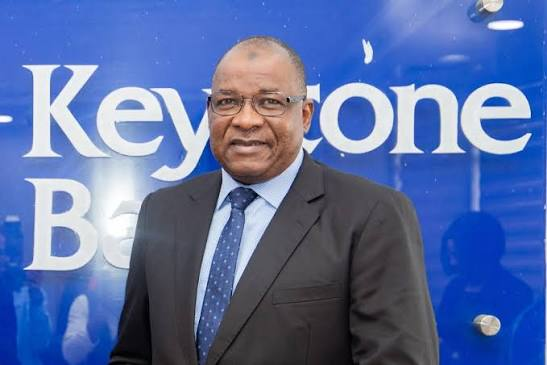
Keystone Bank has introduced the EcoCycle Account, a current account built specifically for enterprises operating within Nigeria’s circular economy (THISDAY).
Beyond basic banking, the account gives eligible businesses working capital, equipment financing, and expansion funding on competitive terms, plus free business clinics and advisory support delivered through the bank’s MSME Online Academy (THISDAY; The Guardian Nigeria).
Keystone Bank MD/CEO Hassan Imam said the goal isn’t just to provide financial services but to help build an ecosystem where green businesses can grow and scale (The Guardian Nigeria). The bank also pointed to its Greenpreneur 2026 World Environment Day Programme, run in partnership with the University of Lagos Green Hub, which brought entrepreneurs together for hands-on sessions on turning recycled plastics into commercial products (The Guardian Nigeria).
Why This Matters
Access to finance remains one of the biggest barriers facing Nigerian green businesses.
Many recycling companies, clean energy startups, and circular economy enterprises struggle to secure funding because traditional lenders often view them as high-risk or unfamiliar sectors.
Products like the EcoCycle Account signal that Nigerian financial institutions are beginning to recognise sustainability not simply as a social responsibility issue, but as an economic opportunity.
As demand for green finance continues to grow globally, similar products could become increasingly common across Nigeria’s banking sector.
2. Stakeholders Call for Greater Investment in Nigeria’s Green Economy

At the Nigeria Environmental Summit (NESt) 2026 in Abuja, government officials, business leaders, environmental experts, and development partners called for increased green financing, stronger environmental governance, and sustainable investment to tackle climate change and accelerate economic growth (The Guardian Nigeria).
Minister of Environment Balarabe Abbas Lawal said Nigeria needs to position itself to benefit from emerging climate and green investment opportunities — including climate funds, carbon markets, blended finance, and waste-to-wealth initiatives (The Guardian Nigeria). Organisers closed the summit with a call to unlock more than $5 billion in green economy investment pipelines (Premium Times), and the event drew more than 1,450 physical and virtual participants, including government officials, investors, academics, and civil society groups (Leadership).
Why This Matters
Nigeria’s green economy is no longer a future ambition — it is gradually becoming an economic priority.
As government develops new climate policies and international investors increase funding for sustainable projects, businesses operating in renewable energy, sustainable agriculture, recycling, green construction, clean transportation, and environmental consulting are likely to benefit from expanding opportunities.
For entrepreneurs, the message is clear: the demand for sustainability solutions is growing.
3. Plastic Waste Recycling Project Shows Nigerian Universities Could Generate Over ₦900 Million
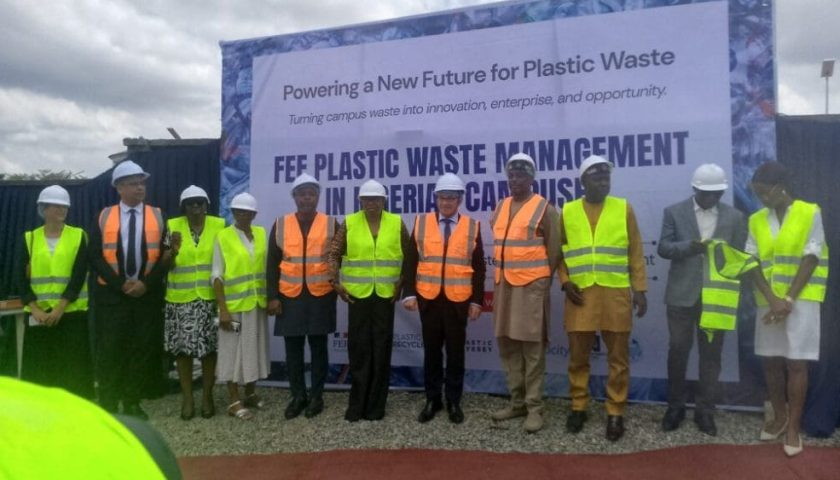
The French Embassy in Nigeria has completed a three-year, €753,000 plastic waste processing project across 13 Nigerian universities, funded through its Fonds Équipe France framework and delivered in partnership with Plastic Odyssey (The Guardian Nigeria; Leadership). The project installed recycling micro-plants on campuses, trained students and researchers, and ran awareness campaigns across 11 campuses reaching more than 1,700 participants (The Guardian Nigeria).
At the closeout ceremony in Abuja, a University of Nigeria representative said projections show participating universities could collectively generate more than ₦900 million from recycling activities — a figure he said points to much larger potential if scaled nationally (The Guardian Nigeria; Leadership). French Ambassador Marc Fonbaustier framed the initiative as proof that environmental sustainability and economic opportunity go hand in hand (The Guardian Nigeria). The University of Lagos, one of two campuses hosting a micro-plant, is now diverting roughly five tonnes of plastic waste from landfills monthly and plans to manufacture furniture from the recycled material (Sustainable Packaging Middle East & Africa).
Why This Matters
Nigeria produces millions of tonnes of plastic waste every year.
Much of it ends up in landfills, drainage systems, rivers, and coastal communities.
The circular economy challenges this traditional “take-make-dispose” model by treating waste as a valuable resource that can be recovered, reused, or transformed into new products.
For entrepreneurs, this represents an emerging business opportunity rather than simply an environmental challenge.
4. Nigeria’s Green Tax Surcharge Takes Effect — and Port Operators Are Split

The Nigeria Customs Service began collecting its Green Tax Surcharge on July 1, applying a 2 percent levy on imported petrol and diesel vehicles with engine capacities between 2,000cc and 3,999cc, and 4 percent on larger engines above 4,000cc, while exempting electric vehicles and mass transit buses (Legit.ng). Alongside the new levy, government cut import adjustment tax on new vehicles from 20 percent to 10 percent, and on used vehicles from 15 percent to 5 percent, to soften the impact (Ships & Ports).
Reception among port operators is mixed rather than uniformly supportive. Former acting ANLCA president Kayode Farinto backed the policy, arguing that the reduction in import adjustment tax more than offsets the new surcharge and that owners of higher-emission vehicles should reasonably bear environmental costs (The Sun). But the current national leadership of the Association of Nigerian Licensed Customs Agents (ANLCA) has pushed back hard, calling on the Federal Government to suspend implementation over inadequate stakeholder consultation and insufficient notice, and objecting in particular to applying the tax to shipments already in transit (Tribune Online). ANLCA’s national president warned that the duty cuts don’t fully offset the surcharge, leaving ordinary Nigerians to absorb the difference in cargo clearance costs (Tribune Online).
Why This Matters
Environmental policies increasingly influence business decisions.
Whether through carbon pricing, environmental taxes, sustainability reporting requirements, or product standards, governments around the world are integrating sustainability into economic policy.
But the industry pushback here is a reminder that green policy adoption in Nigeria isn’t frictionless: implementation gaps, transition timelines, and cost pass-through remain live points of contention between government and the trade community. Businesses that understand these changes early — and the disputes shaping them — are generally better positioned to adapt than those that wait until compliance becomes mandatory.
5. Heavy Rainfall Disrupts Businesses Across Nigeria
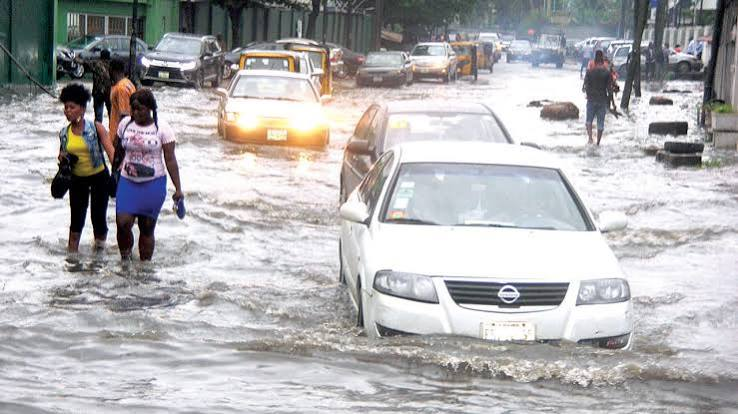
Persistent rainfall has affected homes, transportation networks, markets, and businesses across several parts of Nigeria, with Lagos, Ondo, Ekiti, Oyo, Bayelsa, Delta, Rivers, Cross River, and Edo states all recording flooding in recent weeks (AllAfrica). In Lagos, torrential rainfall submerged major roads, halted commercial activity, and even forced the Federal Airports Authority of Nigeria to temporarily suspend operations at Murtala Muhammed International Airport’s temporary international terminal after floodwater reached the powerhouse (Punch).
The economic toll is significant. Economic and investment experts estimate the flooding could inflict as much as ₦500 billion in losses on Lagos businesses, infrastructure, and livelihoods (The Guardian Nigeria), and the World Bank has estimated that flooding, damaged infrastructure, and lost productivity now cost the Lagos economy up to $4 billion annually (BusinessDay). Federal agencies including NiMet and NIHSA have flagged July through September as the peak flood-risk window for Lagos this year, meaning more disruption is likely ahead (Punch).
Why This Matters
Climate change is often discussed as an environmental issue.
For businesses, it is increasingly an operational issue.
Floods damage inventory. Road closures delay logistics. Power outages interrupt production. Insurance costs rise. Customers change purchasing behaviour.
These impacts reinforce an important lesson: climate resilience is no longer only relevant for governments.
Businesses also need contingency plans, stronger supply chains, and investments that improve resilience.
What This Week’s Headlines Tell Us
Although these five stories cover different industries, they point towards the same trend.
Nigeria’s business landscape is changing.
Banks are creating products for green businesses.
Universities are turning waste into measurable revenue.
Government agencies are introducing new environmental policies — and not everyone is on board yet.
Business leaders are calling for greater investment in sustainability.
Climate risks are becoming business risks, at real and rising cost.
Together, these developments suggest that sustainability is gradually moving from the margins of business strategy towards the mainstream — even where the path there is contested.
For entrepreneurs, professionals, and investors, understanding these trends isn’t simply about staying informed — it’s about recognising where the next opportunities, and frictions, are emerging.
Looking Ahead
As Nigeria continues its transition towards a greener economy, expect to see greater attention on ESG reporting, renewable energy, circular economy businesses, sustainable finance, climate adaptation, and responsible supply chains.
At GreenBusiness.ng, we’ll continue tracking the developments that matter most to Nigerian businesses.
Because building a sustainable business starts with making informed decisions.
Join the Conversation
Which of this week’s stories do you think will have the biggest impact on Nigerian businesses over the next five years? Share your thoughts in the comments below.