
88% of companies globally now view sustainability as a driver of long-term value creation, and more than 80% say they can quantitatively measure a positive return on their sustainability investments (Morgan Stanley, 2025)
For decades, businesses were judged primarily by one measure: profit. Environmental pollution, resource consumption, and labor practices were often treated as separate issues — not central to strategy. That mindset is changing fast. Climate change, resource scarcity, shifting consumer expectations, stricter regulation, and investor scrutiny now push companies to operate responsibly and create long-term value for all stakeholders — an approach known as business sustainability.
Sustainability is no longer limited to multinationals with dedicated departments. Small businesses, startups, manufacturers, retailers, banks, farms, and service providers are all discovering that sustainable practices improve efficiency, cut costs, strengthen customer trust, and build resilience.
For Nigerian businesses especially, rising energy costs, unreliable electricity, waste management challenges, climate risk, and growing global expectations create both pressure and opportunity. The concept is also widely misunderstood — some equate it with environmental protection alone, others treat it as another name for CSR or ESG. It’s broader than both: a way of building businesses that stay profitable while protecting resources, supporting people, and managing risk.
Key Things to Know About Business Sustainability
- 88% of companies globally see sustainability as a driver of long-term value, and over 80% say they can quantify a positive ROI on sustainability initiatives (Morgan Stanley, 2025)
- “Triple outperformers” — companies strong in revenue growth, economic profit, and ESG performance — are more than twice as likely to grow revenue by 10%+ annually (McKinsey, 2023)
- 61% of global business leaders say the lack of sustainable business practices poses a long-term existential risk to their organization (Capgemini, 2024)
- Nigeria’s Climate Change Act (2021) requires every private entity with 50 or more employees to maintain a designated sustainability unit and file annual carbon reports
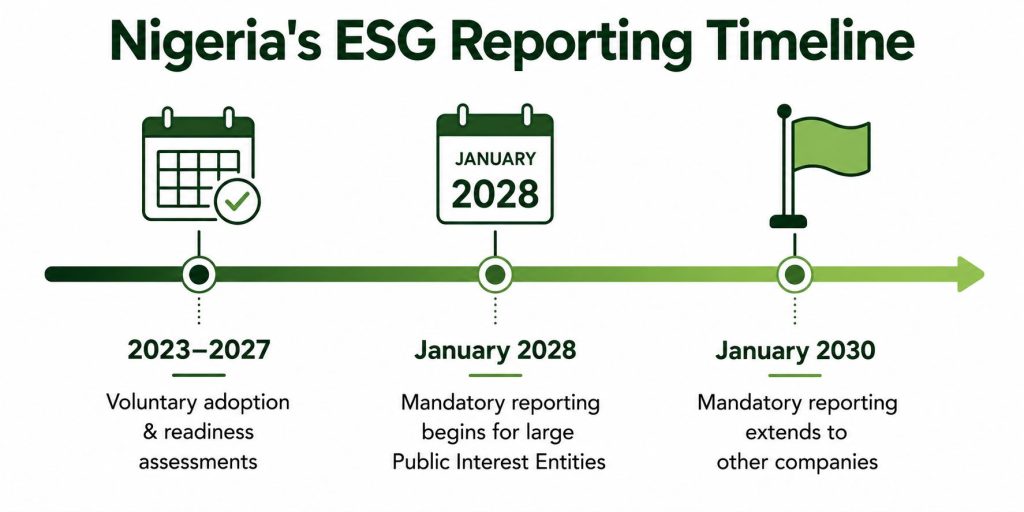
- Nigeria is the first African country to commit to the ISSB’s IFRS S1 and S2 sustainability disclosure standards, with mandatory reporting beginning January 2028 for large Public Interest Entities and January 2030 for other companies (Majorwaves Energy Report, 2026)
- ESG disclosure among Nigerian Exchange-listed firms fell from 55% in 2022 to 42% in 2024 — a gap regulators are moving to close (Majorwaves Energy Report, 2026)
- The Triple Bottom Line framework — People, Planet, Profit — that underpins modern sustainability thinking was coined by sustainability consultant John Elkington in 1994
Table of Contents
Why Sustainability Matters in Business Today
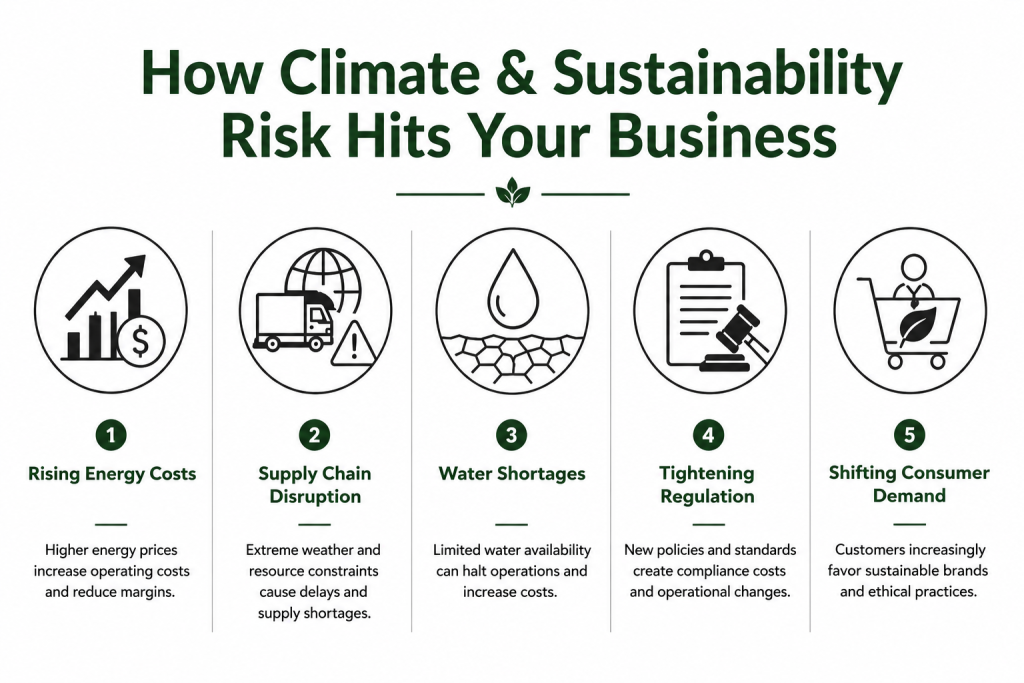
Business has always depended on people and natural resources — every product, service, and piece of infrastructure requires energy, water, materials, transport, labor, and capital. For years, businesses assumed these inputs would stay cheap and available. That assumption no longer holds: extreme weather disrupts supply chains, energy prices fluctuate, water scarcity affects manufacturing, and both regulators and investors are asking harder questions.
This has made sustainability a strategic issue rather than simply an environmental one. Businesses that fail to adapt risk higher costs, reputational damage, and disrupted supply chains; those that embrace it tend to find opportunities to innovate and strengthen their competitive position.
Sustainability Is Now a Business Strategy
One of the biggest misconceptions is that sustainability is primarily about “saving the planet.” Modern businesses increasingly treat it as a strategic management approach, asking questions such as:
- How can we cut costs by using resources more efficiently?
- How can we make our supply chain more resilient?
- How can we prepare for future regulations?
- How can we keep creating value over the next 20–30 years?
This shows up clearly in the data: 90% of executives say sustainability is important to their business, yet only 60% of companies actually have a documented sustainability strategy — a clear gap between intent and execution that early movers can use to their advantage (WifiTalents, 2026)
Why Sustainability Matters for Nigerian Businesses
For Nigerian businesses, sustainability addresses everyday realities: rising electricity and fuel costs, dependence on diesel generators, flooding, waste disposal challenges, and growing expectations from international customers and investors. These pressures affect profitability, but they also create openings — businesses that invest in renewable energy, resource efficiency, waste reduction, and sustainable sourcing often cut costs while strengthening their market position.
The regulatory floor is rising fast, too. Nigeria’s Climate Change Act mandates a dedicated sustainability unit and annual carbon reporting for any private entity with 50+ employees, and the Federal Government has committed to ISSB-aligned disclosure standards (IFRS S1 and S2), phasing in mandatory reporting for large Public Interest Entities from January 2028 and for other companies from January 2030 (IRIS Carbon, 2025)
The stakes are already visible in capital markets: Nigeria’s ESG compliance ranks third in Africa, behind Kenya and South Africa, and analysts have linked weak ESG performance to a sharp fall in long-term foreign direct investment even as short-term portfolio inflows held up (BusinessDay NG, 2026)
For Nigerian entrepreneurs, sustainability isn’t an added burden — it’s a framework for solving real problems, improving competitiveness, and building resilience.
Don’t ask, “How can my business become perfectly sustainable?” Instead, ask: “What’s one improvement we can make this month that benefits both the business and the environment?” Sustainability is built through consistent progress, not overnight transformation
What Is Sustainability in Business?
The word sustainability comes from the idea of maintaining something over time. Applied to business, it means operating in a way that lets a company succeed today without reducing its — or society’s — ability to succeed tomorrow. Unlike models that prioritize short-term financial performance above all else, sustainable businesses recognize that long-term success depends on healthy ecosystems, thriving communities, responsible governance, and resilient operations.
In practical terms, this means asking:
- How does our business affect the environment?
- Are our employees treated fairly?
- Can we remain competitive over the next decade?
- How do our decisions affect future generations?
Sustainability Is About Balance
At its core, business sustainability balances three interconnected goals: economic prosperity, environmental stewardship, and social responsibility — commonly called the Triple Bottom Line (People, Planet, Profit). Rather than competing priorities, these reinforce one another: efficient resource use lowers costs, fair treatment of employees improves productivity, and responsible environmental practices strengthen customer trust.
Sustainability vs. Green Business, CSR, and ESG
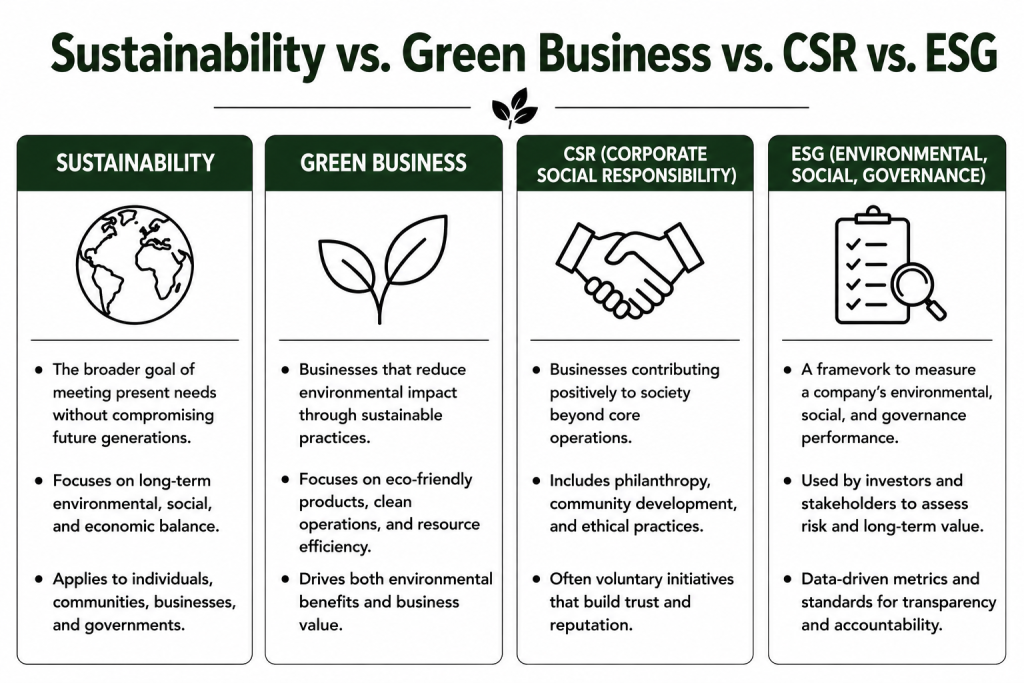
These terms are often used interchangeably, but they answer different questions. Getting the distinction right helps businesses build a comprehensive strategy rather than focus on one dimension alone.
Sustainability vs. Green Business
Green business is one important part of business sustainability, but sustainability extends beyond environmental protection. A green business mainly reduces its environmental impact — energy, waste, emissions. Business sustainability takes a broader view, adding social responsibility, financial resilience, and ethical governance.
| Green Business | Business Sustainability |
| Primarily focuses on environmental performance | Balances environmental, social, and economic performance |
| Often emphasizes reducing pollution, waste, and emissions | Considers long-term resilience across the entire business |
| Can involve eco-friendly products or operations | Influences strategy, culture, governance, and decision-making |
| Usually measures environmental improvements | Measures environmental, social, and financial outcomes |
| Represents one component of sustainability | Represents the overall business philosophy |
Example
Company A installs solar panels and cuts electricity use — a greener business. Company B does the same, but also pays fair wages, sources responsibly, supports local communities, and publishes sustainability reports. Company B is practicing business sustainability, because environmental responsibility is integrated into every part of the organization — not just recycling paper or swapping plastic bags.
Sustainability vs. Corporate Social Responsibility (CSR)
Historically, CSR focused on how companies give back to society — donations, community projects, scholarships, volunteering. These remain valuable but are often separate from core operations.
CSR asks, “How can we give back?”
Sustainability asks, “How can we run the business responsibly every single day?” — meaning sustainability becomes part of product design, manufacturing, procurement, human resources, supply chain management, risk management, corporate strategy, and governance.
| Corporate Social Responsibility | Business Sustainability |
| Often focuses on giving back | Focuses on long-term business operations |
| May exist as separate projects | Integrated into the entire organization |
| Often voluntary initiatives | Shapes strategic decisions |
| Usually community-oriented | Considers all stakeholders |
| Can improve reputation | Improves resilience and competitiveness |
Example
A beverage company sponsoring an annual community clean-up is practicing CSR. If it also redesigns packaging to cut plastic waste and improves worker safety across its supply chain, that’s sustainability — it changes how the business operates, not just what it contributes.
Can Businesses Do Both?
Yes — the strongest organizations often combine both, running energy-efficient factories while also supporting local schools. CSR complements sustainability when the two are aligned with the organization’s long-term purpose.
Sustainability vs. ESG
ESG (Environmental, Social, and Governance) is often confused with sustainability, but they’re not identical.
Sustainability is the destination, while ESG is one of the tools used to measure progress toward it — a framework for evaluating how well an organization manages environmental, social, and governance issues.
Environmental (E)
Emissions, energy efficiency, water management, waste reduction, biodiversity, and pollution prevention.
Social (S)
Employee wellbeing, health and safety, diversity and inclusion, human rights, and community engagement.
Governance (G)
Ethical leadership, board oversight, risk management, transparency, and executive accountability.
| Sustainability | ESG |
| Long-term business strategy | Measurement and reporting framework |
| Focuses on creating lasting value | Focuses on assessing business performance |
| Guides business decisions | Helps investors and stakeholders evaluate companies |
| Applies to organizations of all sizes | Often associated with investors and larger companies |
Why Small Businesses Should Still Care About ESG
Many Nigerian SMEs assume ESG only matters for multinationals. That’s becoming less true — as supply chains evolve, larger buyers increasingly expect suppliers to demonstrate responsible practices, and lenders are paying closer attention to sustainability-related risk.
This distinction has real financial teeth: 71% of C-suite leaders now say ESG investment is a competitive advantage, and 82% expect its role in corporate performance to keep growing (Thomson Reuters, via Arbor.eco 2026)
Don’t worry about producing a glossy sustainability report in your first year. Start by building good habits: measure your electricity use, reduce waste, treat employees fairly, and document your improvements. When your business grows, you’ll already have the foundation needed for more advanced sustainability reporting.
The Three Pillars of Business Sustainability
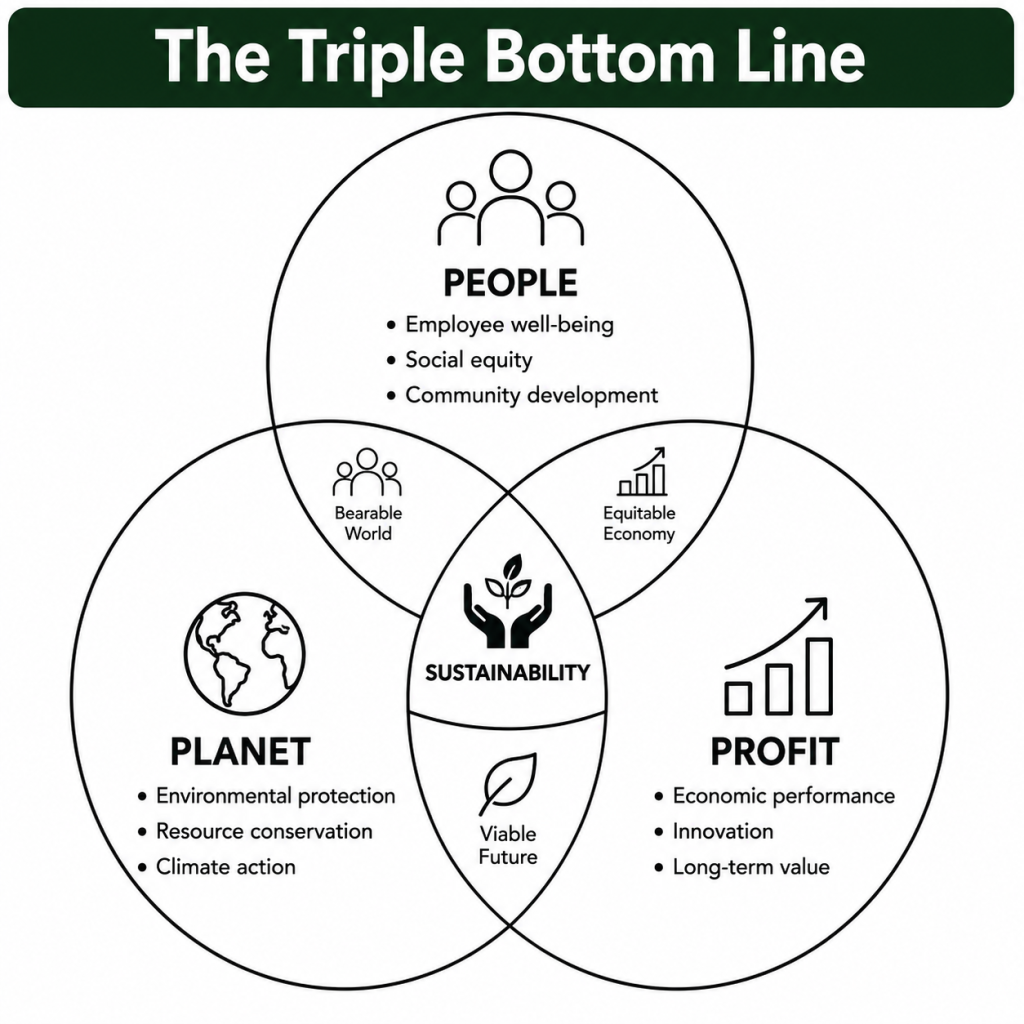
At the heart of every sustainable business are three interconnected pillars — Environmental, Social, and Economic Sustainability — often called the Triple Bottom Line: People, Planet, and Profit. A business that profits while polluting rivers or exploiting workers isn’t sustainable, no matter how strong this quarter looks; likewise, one that ignores its finances to chase environmental goals won’t survive long enough to matter. True sustainability requires balance.
Environmental Sustainability
This pillar focuses on reducing a business’s impact on the natural environment while using resources responsibly. Every business depends on natural resources in some way — electricity, water, fuel, raw materials — and using them inefficiently means higher costs and more environmental degradation.
Key Objectives
- Reduce greenhouse gas emissions
- Improve energy and water efficiency
- Minimize waste and prevent pollution
- Use renewable energy and source materials responsibly
Practical Examples
A manufacturer replaces old machinery with energy-efficient equipment. A hotel installs water-saving fixtures. A logistics company optimizes delivery routes to cut fuel use. A supermarket swaps single-use plastic bags for reusable ones.
Environmental risk is increasingly business risk. Corporate exposure is already visible in disclosure data: only 42% of companies assessed globally in 2025 had published climate adaptation and resilience plans, though that’s up from a third in 2024 (S&P Global, 2026)
Social Sustainability
Businesses depend on employees, customers, suppliers, and communities. Social sustainability focuses on building healthy relationships with these stakeholders.
Key Objectives
- Fair wages and safe working conditions
- Diversity, equity, and inclusion
- Customer health and safety
- Ethical, well-monitored supply chains
Employees Are a Competitive Advantage
Sustainable organizations invest in training, mental health support, and career progression — investments that show up as higher productivity, lower turnover, and better customer service.
Responsible Supply Chains
Businesses increasingly evaluate how suppliers treat workers — fair pay, safe workplaces, respected labor rights — since customers and investors expect responsible practices across the whole chain, not just in-house.
Community Impact
Successful businesses give back to the communities they operate in — hiring locally, investing in education, and reducing pollution that affects nearby residents — which strengthens both reputation and social license to operate.
Economic Sustainability
Many assume sustainability conflicts with profitability. In reality, financial sustainability is one of its core pillars — without economic viability, a business can’t sustain environmental or social value either.
Key Objectives
- Maintain profitability and manage risk
- Innovate continuously
- Invest responsibly for long-term shareholder value
Long-Term Thinking
Sustainable businesses still value financial performance, but also ask whether a decision holds up five years out — not just this reporting period.
Innovation Drives Sustainability
Breakthroughs like electric vehicles, biodegradable packaging, and circular manufacturing show how environmental challenges can become new revenue opportunities.
Resilience
Supply chain disruption, inflation, climate disasters, and regulatory change all create uncertainty. Economically sustainable businesses prepare through diversification, efficiency, and responsible risk management.
Companies that integrate all three pillars tend to outperform on growth as well: firms strong across revenue growth, profit, and ESG performance were more than twice as likely to post 10%+ annual revenue growth than weaker performers (McKinsey, 2023)
Understanding the Triple Bottom Line
The Three Pillars are commonly summarized as the Triple Bottom Line (TBL), developed by sustainability expert John Elkington in 1994 — expanding the idea of success beyond profit alone into three dimensions:
| People | Planet | Profit |
| Employee wellbeing | Resource conservation | Financial performance |
| Community impact | Waste reduction | Long-term profitability |
| Human rights | Carbon reduction | Innovation |
| Diversity & inclusion | Energy efficiency | Business resilience |
| Customer satisfaction | Pollution prevention | Sustainable growth |
These priorities reinforce rather than compete with one another: cutting electricity use lowers costs (Profit) while reducing emissions (Planet); training employees improves retention (People) while lifting productivity (Profit).
When making important business decisions, ask three simple questions: People — how will this affect employees, customers, and communities? Planet — what environmental impact will this decision have? Profit — will this strengthen the business over the long term? If your decision creates value in all three areas, it’s probably moving your business toward greater sustainability
Core Principles of Sustainability in Business
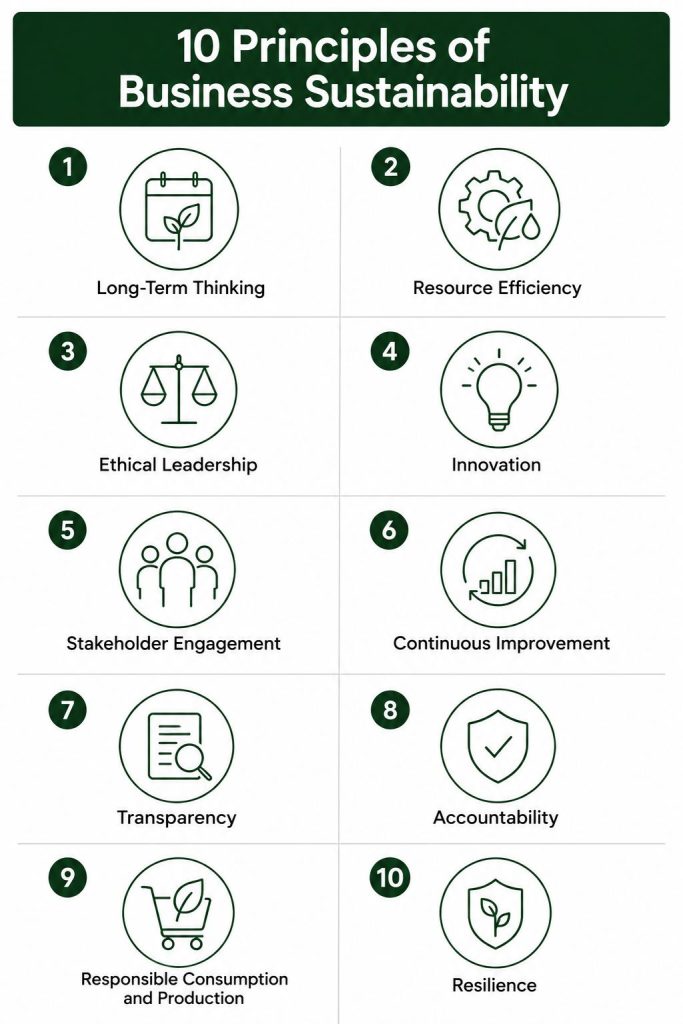
Most successful sustainable organizations are guided by a common set of principles that shape strategy, operations, and long-term planning.
1. Long-Term Thinking
Prioritizing durable value over short-term gains.
2. Resource Efficiency
Doing more with less energy, water, and material.
3. Ethical Leadership
Transparent, accountable decision-making builds trust with every stakeholder.
4. Innovation
Turning environmental challenges into commercial opportunity.
5. Stakeholder Engagement
Considering employees, suppliers, and communities — not just shareholders.
6. Continuous Improvement
Sustainability is a practice, not a finish line.
7. Transparency
Honest reporting on both wins and shortfalls, which helps prevent greenwashing.
8. Accountability
Owning the impact of decisions across environmental, labor, and governance outcomes.
9. Responsible Consumption and Production
Designing for lower waste across the full product lifecycle.
10. Resilience
Building systems that anticipate disruption rather than just reacting to it.
Benefits of Sustainability in Business
Sustainability is sometimes viewed as an added responsibility taken on to satisfy regulators or customers. In reality, most organizations pursue it because it makes them more efficient, more resilient, and better prepared for long-term success.
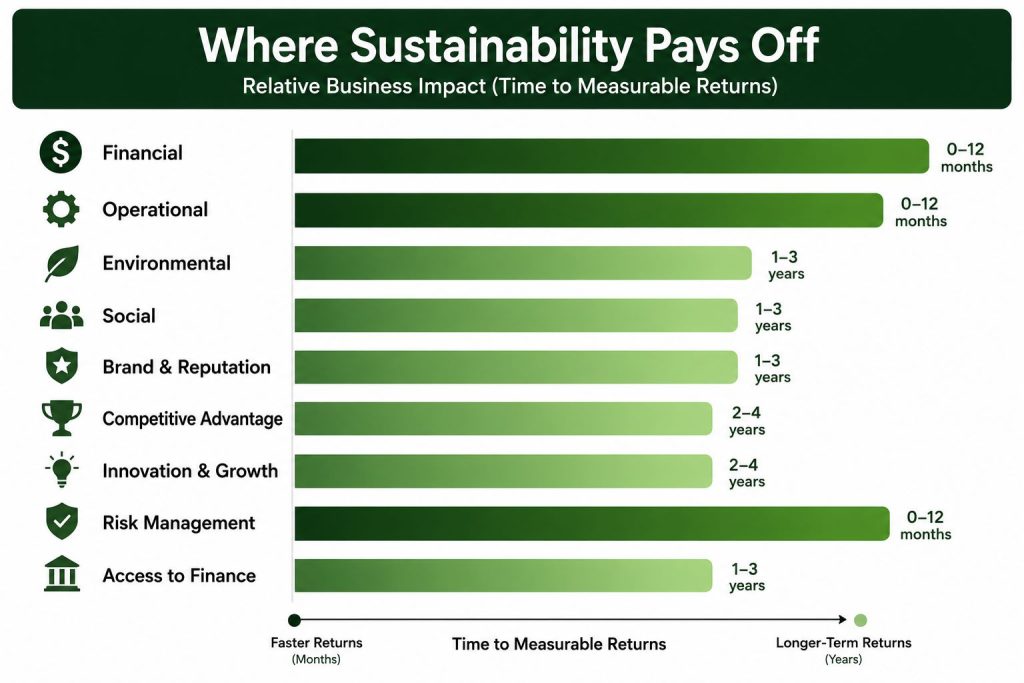
Financial Benefits
The biggest misconception about sustainability is that it always increases costs. Many initiatives generate measurable returns over time by cutting electricity, fuel, water, and material waste. Replacing inefficient lighting with LEDs, for instance, involves upfront cost but pays back through lower bills — sustainability is as much about using resources intelligently as spending responsibly.
Companies with a Chief Sustainability Officer in place report 27% more confidence in the positive financial impact of their sustainability initiatives than companies without one (Forbes, via Perk.com 2026)
Operational Benefits
Sustainable businesses tend to operate more efficiently — streamlining production, improving inventory management, and optimizing transport routes. These improvements boost productivity and add resilience during periods of economic uncertainty.
Environmental Benefits
Reducing emissions, conserving water, and improving waste management deliver benefits beyond regulatory compliance — protecting the ecosystems that long-term economic activity depends on.
Social Benefits
Organizations that prioritize employee wellbeing and ethical sourcing tend to see higher satisfaction, better retention, and stronger customer loyalty.
56% of employees say they’re more likely to stay with an employer that has a strong sustainability record (Capgemini, 2024)
Brand and Reputation Benefits
Customers increasingly judge companies by how they operate, not just what they sell. Genuine sustainability commitments strengthen brand credibility and trust — but only when backed by evidence; unsupported claims damage both.
Competitive Advantage
Businesses that spot emerging trends early gain an edge — new products, new markets, stronger differentiation. Companies that adapt early are usually better positioned than those that delay.
Innovation and Growth
Some of today’s fastest-growing industries — renewable energy, electric mobility, circular economy solutions — exist because businesses responded to sustainability challenges rather than treating them as obstacles.
Risk Management
Climate change, supply disruption, and regulatory shifts all affect performance. Sustainability helps businesses anticipate these risks through diversified suppliers, stronger governance, and reduced dependence on scarce resources.
75% of investment professionals say a company’s sustainability performance is a material factor in investment decisions, and companies actively managing climate-related risk report an 18% higher ROI than peers that don’t (WifiTalents, 2026)
Access to Finance and Investment
Financial institutions increasingly weigh environmental and social risk in lending decisions. For Nigerian businesses courting multinational partners or DFIs, credible sustainability performance is becoming a prerequisite rather than a bonus.
Attracting and Retaining Talent
Professionals — especially younger ones — increasingly want employers whose values align with theirs. Companies known for ethical leadership and environmental responsibility find it easier to attract and keep talented people.
You don’t need a dedicated sustainability department to start creating value. Ask yourself: Which process wastes the most money? Which activity consumes the most electricity? Which materials are regularly discarded? Which customer complaints occur most often? Improving these areas often benefits both your business and the environment.
Real Examples of Sustainability in Business
One of the best ways to understand sustainability is by examining how real businesses apply its principles — integrated into strategy, operations, and corporate culture.
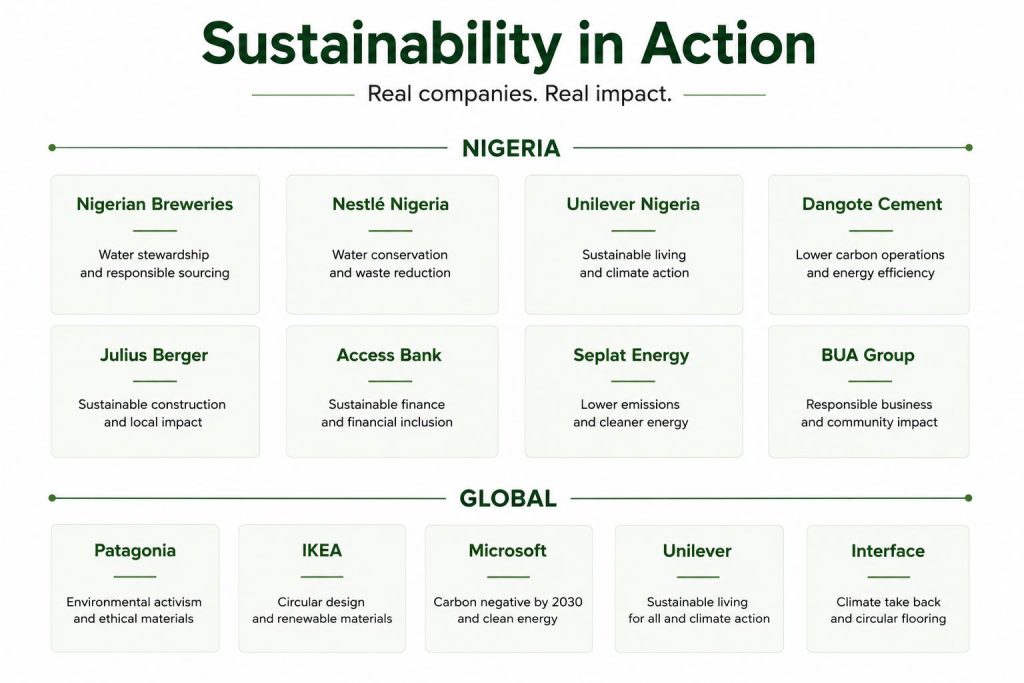
Nigerian Examples
Nigerian Breweries Plc
One of Nigeria’s largest brewers has focused on water efficiency, reduced energy consumption, responsible sourcing, and local agricultural value chains — showing how sustainability fits into large-scale manufacturing.
Nestlé Nigeria
Nestlé Nigeria’s 2025 sustainability report, released in March 2026, disclosed progress on carbon emission reduction, water conservation, energy efficiency, plastic-neutrality initiatives, and regenerative agriculture, alongside delivering over 14 million litres of clean water through community investment programs (BusinessDay NG, 2026)
Unilever Nigeria
Unilever Nigeria’s 2025 Sustainability Report recorded a 29% reduction in waste generation and a 5% decline in energy consumption year-on-year, alongside onboarding 500 women living with disabilities into its workforce across Lagos and Kano (BusinessDay NG, 2026)
Dangote Cement
Dangote Cement improved its CDP climate and water ratings to a B grade in its 2025 disclosures, expanding alternative fuel use and waste-heat recovery as part of its decarbonization roadmap (BusinessDay NG, 2026)
Julius Berger Nigeria
Julius Berger cut total energy consumption by 9% in its 2024 sustainability report while growing revenue 25.6% and sourcing 90% of procurement spend locally (BusinessDay NG, 2026)
Access Bank
Sustainability isn’t limited to manufacturing. Access Bank has integrated environmental and social considerations into lending, governance, and financial inclusion as a core part of its long-term strategy.
Seplat Energy
Seplat has invested in operational efficiency, environmental management, and community development as it expands its role in Nigeria’s energy transition.
BUA Group and BUA Foods — A Cautionary Contrast
BUA Group has incorporated resource efficiency and responsible production across cement, sugar, and food. But not every large Nigerian company is keeping pace — BUA Foods’ most recent sustainability report, covering 2022 performance, was published in October 2023, leaving investors with data that’s now several years old. It’s a clear illustration of why regulators are moving from voluntary to mandatory reporting.
International Examples
Patagonia
Widely recognized for integrating environmental responsibility into its business model — product durability, repair services, responsible sourcing, and activism — proving sustainability can strengthen rather than weaken a brand.
IKEA
Invested heavily in renewable energy, sustainable materials, and circular product design, influencing global supply chains and product development.
Microsoft
Committed to reducing emissions, improving water stewardship, and investing in carbon removal — while integrating sustainability into cloud and AI infrastructure.
Unilever
Embedded sustainability into product development, sourcing, and packaging innovation across its global consumer brands.
Interface
One of the world’s most celebrated sustainability case studies — transformed its flooring manufacturing business through waste reduction and circular economy principles. Full case study later in this guide.
Sustainability Practices Every Business Can Adopt
Regardless of industry or company size, businesses can begin improving sustainability through practical actions:
- Conduct regular energy audits
- Replace inefficient lighting with LED technology
- Reduce unnecessary packaging
- Improve waste separation and recycling
- Conserve water
- Source materials responsibly
- Train employees on sustainability
- Measure environmental performance
- Engage suppliers on responsible practices
- Set annual sustainability goals
- Publish progress updates
- Continuously review and improve operations
The journey toward sustainability is rarely about one major initiative. Instead, it is built through hundreds of small improvements that accumulate over time.
Common Challenges to Business Sustainability
Implementing sustainable practices is rarely straightforward. Businesses of every size face obstacles as they integrate sustainability into operations — recognizing them is the first step toward overcoming them.
1. High Upfront Costs
Solar systems, efficient machinery, and green building upgrades all require initial investment that can look prohibitive to smaller businesses. Many, though, generate savings over time — the right lens is long-term ROI, not sticker price.
2. Resistance to Change
Employees and managers may resist new ways of working out of habit or fear of added responsibility. Communication, training, and leadership commitment help overcome this.
3. Limited Knowledge and Expertise
Many business owners know sustainability matters but aren’t sure where to begin — which initiatives to prioritize or which standards to follow. Ongoing education closes this gap.
4. Difficulty Measuring Impact
Quantifying carbon emissions, water use, or supplier performance is hard, though digital tools and recognized reporting frameworks are making it easier.
5. Greenwashing
Exaggerating or misrepresenting environmental claims — vague labels, selectively reported results — damages trust and exposes businesses to legal and reputational risk.
6. Supply Chain Complexity
Many sustainability impacts sit outside a company’s direct operations, across suppliers with different standards and limited visibility. Building sustainable supply chains takes collaboration, not control.
Cost remains the single biggest barrier in practice: 61% of consumers globally still say sustainable purchases are too expensive, and businesses face a similar tension between upfront investment and near-term margins (Bain & Company, via Perk.com 2026)
How Businesses Can Overcome These Challenges
While every organization’s sustainability journey is different, several practical strategies can help businesses overcome common obstacles.
| Challenge | Practical Solution |
| Limited budget | Start with low-cost, high-impact improvements such as energy efficiency and waste reduction |
| Resistance to change | Train employees and communicate the business value of sustainability |
| Lack of expertise | Invest in education, certifications, and trusted sustainability resources |
| Difficulty measuring impact | Begin tracking simple metrics before adopting advanced reporting frameworks |
| Greenwashing risks | Report honestly and support claims with evidence |
| Supply chain challenges | Work collaboratively with suppliers to improve sustainability performance over time |
| Nigeria-specific: data & capacity gaps | Run a dry reporting cycle before mandatory ISSB deadlines hit in 2028/2030 |
Did You Know?
- More than half of global GDP depends, to varying degrees, on nature and the ecosystem services it provides.
- Improving energy efficiency is often the fastest way businesses cut costs while lowering emissions.
- Nigeria’s growing renewable energy, recycling, and climate technology sectors are creating new opportunities for entrepreneurs and investors.
Case Study: Interface — Redefining Manufacturing Through Sustainability
Manufacturing businesses aren’t usually the first example people think of for sustainability. Yet Interface, one of the world’s largest modular flooring manufacturers, became one of its most respected success stories.
In the 1990s, founder Ray Anderson challenged the company to eliminate its environmental footprint while staying commercially successful. Rather than a PR campaign, Interface rebuilt manufacturing, product design, and materials sourcing around circular-economy principles — reducing impact while improving efficiency and reputation.
Key Lessons
- Sustainability works best integrated into strategy, not treated as a side project.
- Innovation often emerges from environmental challenges.
- Long-term thinking creates long-term value.
“Business cannot succeed in societies that fail.” — World Business Council for Sustainable Development (WBCSD)
Companies depend on healthy communities, stable economies, and trusted institutions. Protecting these foundations isn’t separate from business success — it’s fundamental to it.
Future Trends in Business Sustainability
Several emerging trends are expected to shape how organizations operate over the coming decade.
1. Artificial Intelligence for Sustainability
AI is helping businesses optimize energy use, predict equipment failures, and monitor emissions more efficiently.
2. ESG Reporting
As investors demand greater transparency, disclosure expectations keep growing — even for smaller businesses via their supply chain partners. Nigeria’s timeline is specific and dated: voluntary adoption through 2027, mandatory ISSB-aligned disclosure for large Public Interest Entities from January 2028, and for other companies from January 2030 (IRIS Carbon, 2025)
3. Circular Economy
Businesses are shifting from “take-make-dispose” toward keeping products and materials in use longer, reshaping product design and packaging.
4. Sustainable Finance
Banks and investors are directing more capital toward businesses with strong sustainability performance.
5. Climate Risk Management
Flooding, heatwaves, and supply disruption are increasingly folded directly into strategic planning rather than treated as separate risks.
Common Mistakes Businesses Make
Many organizations unintentionally undermine their sustainability efforts by making avoidable mistakes. Common examples include:
- Treating sustainability as a marketing campaign instead of a business strategy
- Focusing only on environmental issues while ignoring social and governance responsibilities
- Pursuing too many initiatives at once instead of setting realistic priorities
- Failing to measure progress
- Overlooking employee engagement
- Making sustainability claims without supporting evidence
- Ignoring supplier sustainability performance
- Viewing sustainability as a cost rather than a long-term investment
Avoiding these mistakes can significantly improve the effectiveness of a sustainability strategy.
Frequently Asked Questions
What is sustainability in business?
Operating a company in a way that balances long-term profitability with environmental responsibility and positive social impact.
Is sustainability only about protecting the environment?
No — it also includes social responsibility, ethical governance, and financial resilience.
What are the three pillars of business sustainability?
Environmental, social, and economic sustainability — together, the foundation of sustainable business strategy.
Is sustainability profitable?
Often, yes. Many initiatives cut costs and open new opportunities, though some require upfront investment.
Can small businesses become sustainable?
Yes — starting with waste reduction, energy conservation, and fair treatment of employees.
What is the difference between sustainability and ESG?
Sustainability is the strategy; ESG is the framework used to measure and report on it.
Is sustainability mandatory in Nigeria?
Requirements are tightening. The Climate Change Act 2021 already requires a sustainability unit for entities with 50+ employees, and mandatory ISSB-aligned disclosure phases in from January 2028 for large Public Interest Entities and January 2030 for other companies.
How can businesses measure sustainability?
Common indicators include energy and water use, waste generation, recycling rates, emissions, and supplier performance.
What industries benefit most from sustainability?
Nearly every industry — manufacturing, agriculture, finance, retail, healthcare, and more.
Where should a business begin?
Understand your biggest environmental, social, and operational impacts, set achievable goals, and improve continuously.
Final Thoughts
Business sustainability is no longer a niche concept for environmental organizations or large multinationals. It’s a practical framework for building resilient, competitive, future-ready businesses — and organizations that embrace it are better equipped to innovate, manage risk, and create lasting value as markets evolve.
For businesses in Nigeria, it’s more than a response to global trends. It’s a pathway to addressing local challenges — energy reliability, waste management, climate resilience — while unlocking new investment ahead of regulatory deadlines now only a few years away.
The journey doesn’t require perfection. It requires commitment — every improvement, from reducing waste to strengthening governance, builds a stronger business and a more sustainable economy. At GreenBusiness.ng, we believe sustainability is about helping businesses make smarter decisions today so they can succeed tomorrow.
References
- Morgan Stanley – Sustainable Signals: Corporates 2025
- McKinsey & Company – ESG and financial performance research, 2023
- Capgemini – Sustainability leadership survey, 2024
- WifiTalents – Sustainability in the Business Industry Statistics, 2026
- Arbor.eco – 80+ Sustainability Statistics for 2026
- Perk.com – Business Sustainability Statistics (Updated 2026)
- S&P Global – Top 10 Sustainability Trends to Watch in 2026
- IRIS Carbon – Top ESG Reporting Best Practices for Nigerian Businesses
- Majorwaves Energy Report – The Basics of Sustainability Reporting: Nigeria Context
- BusinessDay NG – Nigeria’s listed corporations face capital access risks amid growing ESG divide
- Climate Change Act 2021 (Nigeria)
- World Business Council for Sustainable Development (WBCSD)